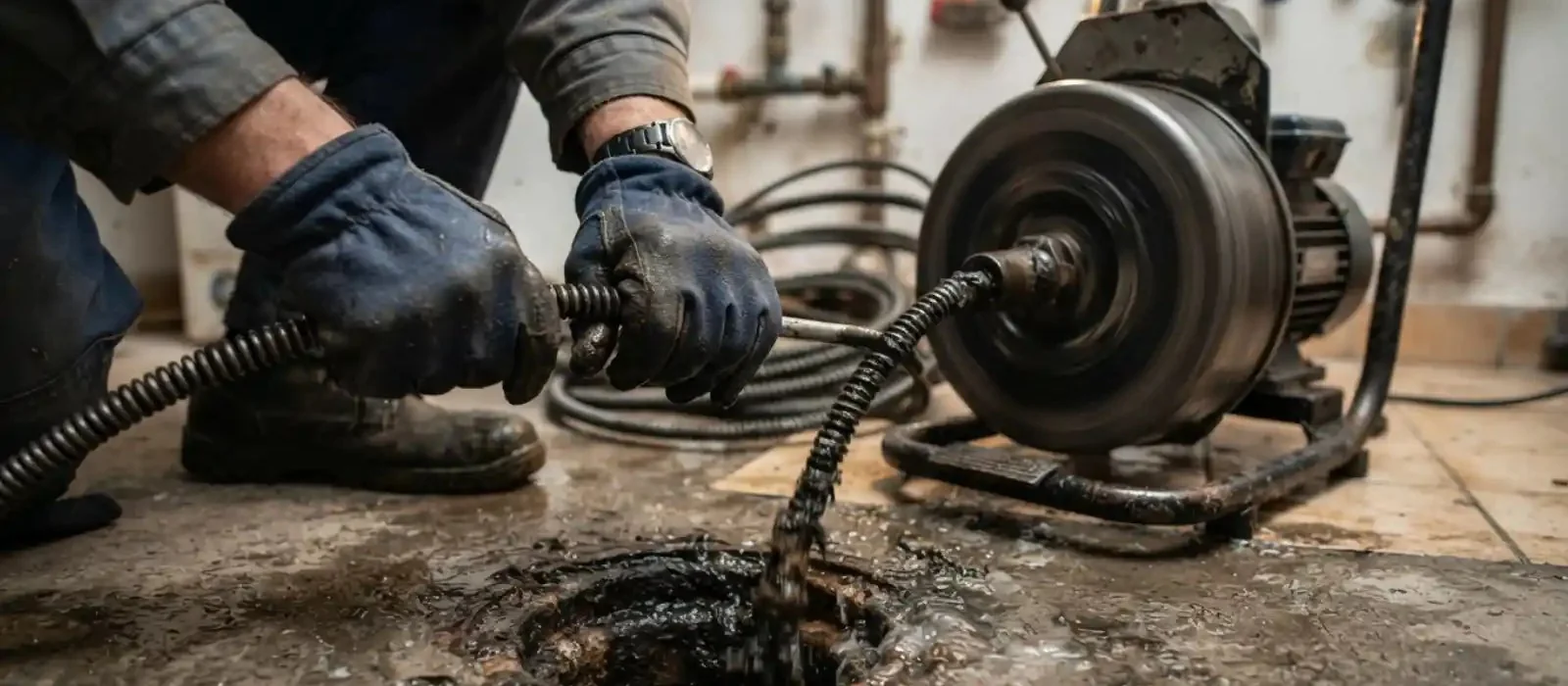
Why two main line clogs never cost the same
A main sewer line carries every drain in the house out to the public sewer. When it blocks, water backs up at the lowest fixture, usually a basement floor drain, a tub, or a first-floor toilet. The work needed to reopen it varies widely.
One house may have a grease and paper clog a few feet from an accessible cleanout. Another may have roots threaded through a joint twenty feet out. Both look the same from inside the house, which is why a plumber should find the cause before quoting.
The cost factors, in the order they matter
| Factor | What changes | Effect on the job |
|---|---|---|
| Access point | Cleanout present or not | No cleanout can mean pulling a toilet or cutting in a new one |
| Cause of clog | Grease, paper, wipes, roots, collapse | Roots and damage need more than a routine clear |
| Tool needed | Cable machine or water jetting | Jetting takes more equipment and more time |
| Camera inspection | Needed to see cause and location | Adds a step but prevents guessing |
| Pipe condition | Sound, cracked, offset, or bellied | Decides clearing versus repair or lining |
| Timing and urgency | After-hours or same-day response | Emergency scheduling can change the price |
Notice that the cleaning tool is only one line. The cause and the pipe condition decide whether the clog is a one-time fix or a repeat problem.
Cleanout access: the cheapest thing you can find early
A cleanout is a capped pipe fitting on the main line, usually in the basement near the foundation wall or outside near the house. With one, a plumber can feed a cable or jetter straight into the line. Without one, access may mean removing a toilet or opening the pipe, which adds labor.
Locate yours before anyone arrives and clear space around it. If you cannot find one, tell the dispatcher that on the phone, since it affects how the job is planned.
Cable machine or water jetting: which one does the job?
Cable (snake) machine
- Good for a soft clog such as paper or grease close to the cleanout
- Quicker to set up
- Can poke a hole through a clog without fully clearing the pipe wall
- Often paired with a camera afterward
Water jetting
- Scours grease and scale off the pipe wall
- Better for repeat clogs and heavy buildup
- Can cut small roots when fitted with the right nozzle
- Needs more equipment, so the visit takes longer
A cable often opens the flow fastest. Jetting cleans more thoroughly. If the line keeps clogging every few months, the sensible conversation is about jetting and a camera, not another quick cable pass.
Our sewer line cleaning work uses the tool that matches what the clog actually is, and the plumber explains why before starting.
Sewage backing up right now?
Stop using water, keep away from the backed-up fixtures, and call the 24/7 line so the dispatcher can plan the right equipment.
Roots, camera, and the repair or lining decision
Roots enter through joints and cracks, then keep growing. Cutting them restores flow, but they return if the opening stays. A camera inspection shows where the roots enter, whether the pipe is cracked or bellied, and how far the damage runs.
That picture decides the next step. A sound pipe may only need regular cleaning. A damaged section may need spot repair, a liner, or replacement, all handled under sewer line repair once the camera shows the length and depth.
- Clear only: fits a sound pipe where grease or paper was the cause. It costs least, but it repeats if the cause stays.
- Spot repair: fits one damaged section in an accessible spot. It needs digging or an access opening.
- Lining: fits cracks or root entry along a straight run. The pipe must be cleaned first, and bends limit it.
- Replacement: fits a collapsed, badly offset, or failed run. It is the most disruptive and the longest lasting.
Worth knowing about wipes and grease
Wipes marketed as flushable do not break down like paper, and grease cools into a solid in the pipe. Both are everyday causes of main line clogs. Keeping them out of the drain is the cheapest prevention there is.
Before the plumber arrives
A few minutes of prep can shorten the visit.
- Stop running water, laundry, and dishwashers
- Find the cleanout and clear the area around it
- Note which fixtures back up and which still drain
- Keep children and pets away from any sewage
- Write down any earlier clogs and what was done
What affects the price of clearing or repairing a main line
The factors above come down to labor, equipment, and what the pipe needs afterward. They are the same questions a plumber asks you on the phone.
After a short phone triage you get a price before work starts. If the camera finds something new, the plumber stops and explains the change before going further.
What Pennsauken homeowners should know about the sewer system
In Pennsauken, local sewer collection is handled by the Pennsauken Sewerage Authority, and the Camden County Municipal Utilities Authority (CCMUA) treats the wastewater. Most homes are on public sewer, not septic. If sewage backs up, the first question is whether the clog is in your own line or in the public main in the street.
A camera answers that question, and the Sewerage Authority can tell you what it maintains. CCMUA also closed a NJ Water Bank loan in 2024 to separate combined stormwater and sanitary sewers and separate water and sewer mains in Pennsauken, to improve water quality and reduce localized flooding. That is a utility project. Ask the authority about what it means for your street.
The U.S. EPA lists blockages among the causes of sanitary sewer overflows, and notes that overflows can back up into homes. CCMUA's customer service line is on ccmua.org for questions about treatment.
Source type: CCMUA public pages, NJ I-Bank public news release, township authority listing and U.S. EPA public pages
Standards and rules behind this advice
According to the EPA, blockages are a common cause of sanitary sewer overflows and building backups, and the Camden County Municipal Utilities Authority publishes guidelines on what should stay out of drains.
Main sewer line clog questions
If only one sink is slow, the clog is likely in that branch. If several fixtures back up together, or a basement floor drain gurgles when you run water upstairs, the main line is the likely problem.
A plumber can confirm with a cable or a camera.
Not always, but it is the only way to see roots, cracks, or a belly in the pipe. If the line has clogged more than once, a camera prevents repeat guesswork.
It also gives you a record to compare against any sewer line repair recommendation.
Not always. Lining avoids a trench, but it needs a clean pipe and a run that is not badly collapsed. The final comparison depends on the length, depth, and what is above the pipe.
Ask the plumber to explain both options with the camera footage in hand.
A small plunger or hand auger will not reach a main line clog, and chemical drain cleaners can harm pipes and are unsafe near standing sewage. Rental machines can also cut your hands or damage the pipe.
If sewage is backing up, avoid contact and call a plumber.
Call a plumber first to learn whether the clog is in your line or in the public main. If the camera shows it is in the street main, contact the Pennsauken Sewerage Authority.
Neighbors in Maple Shade and Cinnaminson have their own utility contacts, so the number to call changes across the township line.