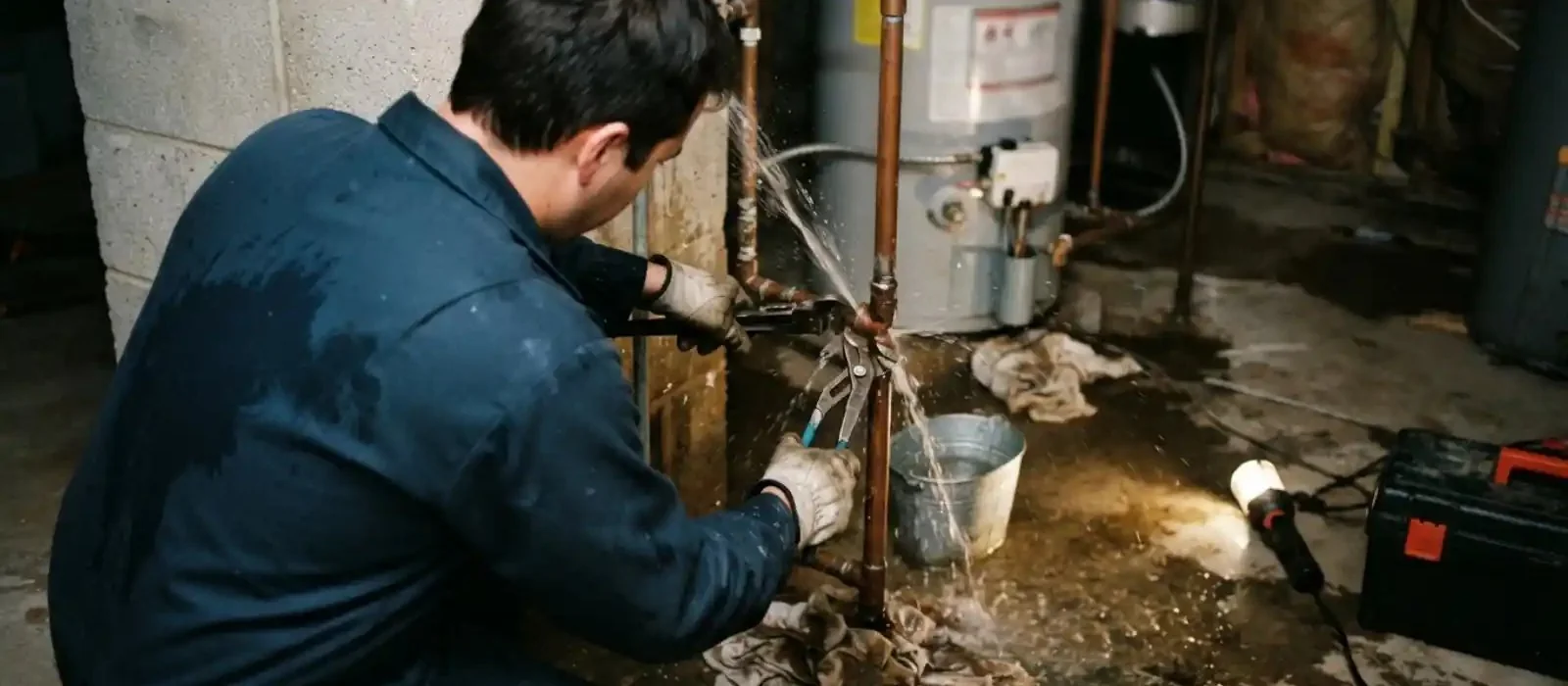
Burst pipe emergency: stop the water in this order
The goal in the first few minutes is simple. Stop the flow, protect the electrical system, and keep the damage from spreading. Everything else can wait until the water is off.
Find and close the main valve
Most homes have it where the line enters the basement or utility room, often near the meter. Turn a round handle clockwise, or turn a lever a quarter turn until it sits across the pipe.
Drain the lines
Open the lowest faucet in the house, usually in the basement or on the first floor, and let the water run out. Flush a toilet once to empty the tank.
Cut power to a wet area only if it is safe
If water is near outlets, appliances or the panel, stay out. Switch off a breaker only if you can reach the panel on dry floor, and call the 24/7 line if you cannot.
Turn off the water heater
Switch off an electric heater at its breaker, or set a gas unit to pilot or off. A heater that loses its supply should not keep heating an empty or half-empty tank.
Call and describe what you see
Tell the dispatcher where the water is coming from, whether the main valve closed fully, and if any ceiling is sagging.
If the problem is on the street side
The street valve (curb stop) and the meter belong to the utility, not to you. If the leak is between the street and the meter, or the main valve in your house will not stop the flow, call Merchantville Pennsauken Water Commission's water emergencies line at (856) 663-0044. Customers on New Jersey American Water should call that utility instead, so check your bill.
What you can do safely
- Shut the main valve and drain the lines.
- Move belongings, rugs and electronics out of the water's path.
- Photograph the pipe and the damage before cleanup.
- Soak up standing water with towels, a mop or a wet vacuum on a dry outlet.
When to call a plumber right away
- The main valve will not turn or does not stop the flow.
- Water reaches outlets, appliances or the panel.
- A ceiling bulges or drips from a hidden source.
- You smell gas or see signs of sewage mixed in.
- The pipe is cracked in a spot you cannot reach.
Cracked or broken pipes: what failed and how it is fixed
A pipe rarely fails for one reason alone. Pressure, corrosion, a hard knock, vibration, or a freeze each leave a different mark, and the right repair depends on which one happened. A plumber looks at the break first, then at the length of pipe around it.
A single clean split in good pipe may need only a short section replaced. If the nearby pipe is thin, pitted or flaking, the better fix is a longer run, because patching one weak spot often just moves the next failure down the line.
| Material | Common failure | Usual repair |
|---|---|---|
| Copper | Pinholes from corrosion, split from a freeze, loose or burned soldered joints | Cut out the damaged section and sweat in new copper, or use approved fittings |
| Galvanized steel | Rust inside builds up, then thin walls crack or fittings seize | Replace the run, since the pipe around the crack is usually worn too |
| PEX | Fitting failure, damage from a sharp object, or UV exposure | Replace the section and the fitting with matching crimp or expansion parts |
| Cast iron or plastic drain | Cracked bell, separated joint, root damage | Cut out the bad length and reconnect with proper couplings |
Copper pipe repair
Copper is common in homes of that era, and it holds up well when conditions are right. Pinholes tend to appear where water chemistry, flow speed or a poor joint wears at one spot. A green or white crust on the outside is an early warning worth showing us before it becomes a spray.
Pipe leak repair and drain pipe repair
A dripping supply joint is a different job from a cracked drain. Supply lines are under constant pressure, so even small drips rise to an emergency if they sit above finished ceilings. Drain lines carry waste, so a crack there means water that is not clean, and we ask you to avoid contact.
When the broken pipe is a drain, the repair is cut-and-couple or a replaced section, plus a check that the slope still carries water away. If a drain breaks under a slab or in the yard, see our sewer line repair page for what that involves.
Water on the floor right now?
Close the main, then call. We will talk you through the rest while we set up a same-day visit.
Frozen pipes: thaw them safely
A frozen pipe may not have burst yet, but it can when it thaws. If a faucet gives you a trickle or nothing in cold weather, assume a freeze. Shut the main water valve, open the affected faucet, and warm the area gently.
Use a hair dryer on low or warm towels, moving from the faucet toward the frozen section. Never use a torch, a propane heater or any open flame. Metal conducts heat quickly, and flame has started fires inside walls. If you cannot find the frozen spot or the pipe is already split, call the 24/7 line.
Pipes most at risk sit along exterior walls, in unheated crawlspaces and basements, and near rim joists. Keeping cabinet doors open on cold nights and sealing air gaps helps. We do not quote how deep the ground freezes here, since it varies by season, so ask the township or the utility for local guidance if you are planning an outdoor line.
Water damage first steps after the pipe is stopped
Do this once the water is off
Speed matters, because wet drywall and insulation can grow mold if left damp.
- Photograph every wet surface and the broken pipe before moving anything.
- Remove standing water and open windows to move air if the weather allows.
- Lift wet rugs and move furniture to dry ground.
- Do not turn the main back on until the pipe has been repaired and tested.
- Call your insurer, and ask about dry-out help if drywall or floors are soaked.
- Keep the broken pipe section if possible, since it shows the cause.
Pennsauken homes and why breaks happen where they do
The median house in Pennsauken dates to 1964, with the oldest stock in the south of the township and newer construction toward the northeast. Homes of that era often have a mix of copper, some leftover galvanized steel, and drain lines in cast iron. That mix means the first break is not always the only weak spot.
After the repair, we point out any older sections nearby, and you can decide whether to replace them now or later. For a pattern of failures, our repiping page explains when replacing the whole system beats repeated patches.
Source type: American Community Survey median year built, via Census data
What affects the price of burst pipe repair
Burst pipe repair is not a fixed menu item, because the break and the house decide the work.
We start with phone triage, then a licensed plumber looks at the break. You receive a clear price before work starts, and nothing begins until you agree.
Not sure if it is a burst or a slow leak?
A pinhole that sprays or a joint that weeps are both worth a call. We will help sort out how urgent it is.
Where this fits with other leak work
If the water source is not obvious, leak detection finds the spot without tearing out half a wall. If the break is on the line from the street, water line repair covers the underground side. Plumbing permits in Pennsauken are handled by the township Construction Code Department, and we tell you if your repair requires one.
Standards and rules behind this advice
According to the National Weather Service, a freeze means air temperature at or below 32 degrees Fahrenheit, which is the point where exposed pipes become a concern. Supply piping and fittings used in repairs should be listed to NSF/ANSI 61 for drinking water contact.
Burst and frozen pipe questions
Yes. Night and weekend calls reach the same line, and the first thing you get is shut-off coaching over the phone. A plumber is then dispatched for a same-day visit as the schedule permits. We cannot state an arrival time in advance, since that depends on other open calls.
In most homes it sits where the water line enters the building, often in the basement near the meter, or in a utility room. Find it before you need it, label it, and check that it turns. If it is stuck, say so on the call, because that changes how we handle the visit.
The street valve and meter belong to the utility. Call MPWC water emergencies at (856) 663-0044 if the leak is on the street side or your main will not close. If your bill shows New Jersey American Water, call them instead.
In many cases yes, with care. Close the main, open the faucet, and warm the pipe gently with a hair dryer. Never use an open flame or torch. If the pipe is already cracked, or you cannot find the frozen spot, call us before turning the water back on.
It depends on the age and condition of the pipes near the break. One failure in sound copper is usually a spot repair. A break in corroded or galvanized pipe often means more weak sections, and repiping becomes worth pricing out.
Dry the area quickly. Remove standing water, run fans, and pull wet materials that cannot dry in place. If drywall or insulation stays damp, a restoration company can assess it. Ask your insurer about covered steps and keep your photos.
It can. Water that runs before you shut it off passes through your meter. Contact your utility about billing questions for the period, and keep the repair record, since it explains the usage.