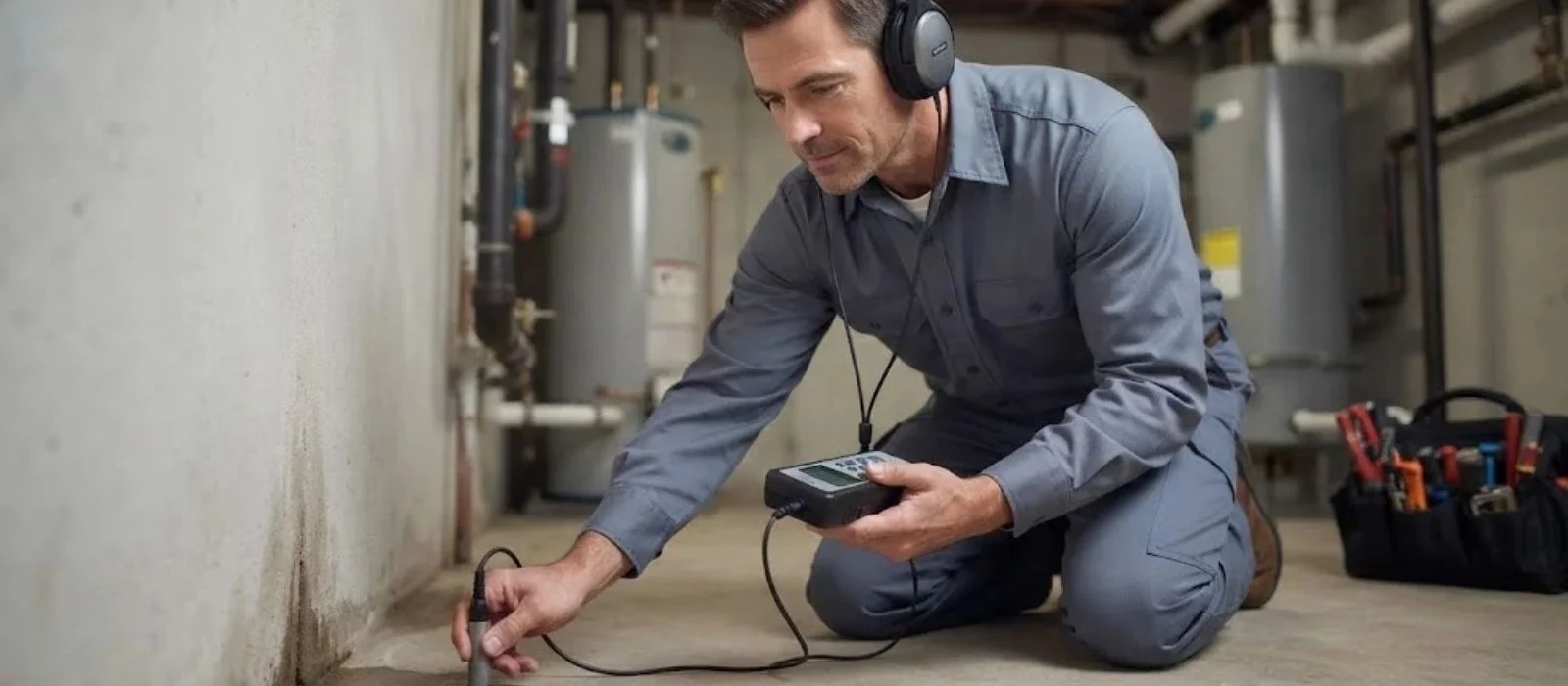
Two sources that look the same on the floor
A pinhole in a copper line under a slab can leave a wet patch that looks just like seepage through a wall. A downspout dumping beside the foundation can do the same thing from the other side.
The difference matters because the repairs have nothing in common. One is a pipe job. The other is grading, gutters, drains or wall sealing. Paying for the wrong one means the water keeps coming.
Signs that point to a plumbing leak
The meter keeps moving
With every faucet and appliance off, a water meter that still turns means water is going somewhere. That points to a supply pipe, not the weather.
A warm or damp spot on the floor
A warm patch on a slab can come from a leaking hot line. Water that is warm to the touch is rarely groundwater.
Dampness in dry weeks
If the area is wet after a week with no rain, rainfall is probably not the cause. Look to a pipe, a drain or a fixture.
A rising water bill
A bill that climbs with no change in the household deserves a look at the lines.
Signs that point to groundwater or drainage
- Water appears after heavy rain and fades as the ground dries.
- Dampness is along the lowest wall or where the wall meets the floor, not at one point.
- Gutters overflow, downspouts end near the foundation, or soil slopes toward the house.
- The meter test comes back clean.
The tests a plumber runs, in order
Meter test
Shut off every fixture and appliance, read the meter, wait, and read it again. EPA's WaterSense program describes the basic version: wait two hours with no water use and treat any change as a probable leak.
Isolate and dye test
Toilets are a common hidden loss, so a few drops of food coloring in the tank show a leaking flapper if color reaches the bowl after about 10 minutes without a flush.
Moisture mapping
A moisture meter and, where useful, a thermal camera trace the wet area across the slab or wall. The pattern shows whether it spreads from a point or from the whole edge.
Camera and line check
A drain camera looks inside waste lines near the wet zone for cracks, offsets or roots. If a line is the source, the footage shows it.
Water at the foundation right now?
Shut off the main if water is spreading, then call. Dispatch answers 24/7 and sorts pipe problems from drainage ones.
| What you see | Leans toward | Sensible next step |
|---|---|---|
| Meter moves with everything off | Supply line leak | Leak detection and line tracing |
| Wet only after storms | Groundwater or drainage | Check gutters and grading, then a waterproofer |
| Warm spot on the slab | Hot water line leak | Leak detection before any slab work |
| Gurgling or smell near a floor drain | Drain or sewer line issue | Camera inspection of the drain |
| Whole lowest wall damp, meter still | Seepage through the wall | Waterproofing or engineer evaluation |
What a plumber can and cannot determine
A plumber can prove or rule out a leaking pipe. That is the useful half of the answer, since a clean result narrows the cause to the outside of the house. The leak detection service is built around that question.
What a plumber cannot do is judge structural movement, failed footing drains or a wall that is bowing inward. Those are for a waterproofing contractor or a structural engineer. A good plumber tells you where the plumbing stops.
Why the cost of finding it varies
Diagnosis time depends on access, how many lines run through the wet area, and whether the leak shows only under pressure. A visible split pipe is quick. A slow loss under a finished floor takes more steps. The 24/7 line gives a price over the phone after triage, and the price is set before work starts.
Pennsauken housing and water: what applies to your foundation
Census survey data puts the median year built for Pennsauken homes at 1964, with the oldest housing in the south of the township. Homes of that era often have older supply piping and original foundation drainage, so both explanations stay plausible. That is why the meter test comes first.
Most addresses are served by the Merchantville Pennsauken Water Commission, and a few may be on NJ American Water, so check your bill. The commission lists a 24-hour water emergency number on its website for main breaks or water in the street. If the water outside your home is coming from the street, call that line rather than a plumber.
Source type: Merchantville Pennsauken Water Commission public website, EPA WaterSense guidance, and American Community Survey housing data
When to call a waterproofer or an engineer
What you can check yourself
- Read the meter with everything off and compare after two hours.
- Walk the outside and note downspouts, grade and standing water.
- Look for color in toilet bowls after a dye test.
When to bring in a pro
- The meter moves: call a plumber for leak detection.
- The meter is still and the wall is damp: a waterproofer such as our basement waterproofing team can review drainage and sealing options.
- Cracks widen or a wall leans: a structural engineer.
- Water touches outlets or appliances: stay clear and cut power only if the area is dry.
Have this ready before the visit
Notes save time on site.
- When the water first appeared and whether it rained that week.
- Location of the main water shutoff and the meter.
- Meter readings before and after the two hour test.
- Photos of the wet area and any residue on the wall.
- Whether the spot is warm, and which fixtures are on that side of the house.
Neighbors in Cherry Hill and Maple Shade ask the same question after wet weeks, and the answer follows the same order of tests.
Standards and rules behind this advice
EPA WaterSense publishes a meter-based leak test guideline that helps separate a plumbing leak from groundwater.
Foundation water questions
A plumber can rule a pipe in or out. If the meter holds still, the lines hold pressure and the drains pass a camera check, the water is coming from outside the plumbing system.
Pinning down the outside cause, such as a failed footing drain or wall seepage, belongs to a waterproofing contractor or engineer.
No. Many slab leaks are slow pinhole losses that show as damp flooring, a warm spot or a bill that creeps up. Others are drain line cracks that leak only when water runs.
Testing separates them before any floor is opened.
If water is spreading or the meter is racing, yes. Closing the main stops a supply leak and lets you see whether the water stops too.
If it keeps arriving with the main closed, groundwater or a drain is the likelier source.
A meter test needs a couple of waiting hours by itself. Moisture mapping and camera checks add time on site, depending on access and the size of the area.
The crew explains the plan after phone triage, and the price is given before work starts.
Most addresses buy water from the Merchantville Pennsauken Water Commission, which lists a 24-hour operator for water emergencies on its website. A few addresses may be on NJ American Water, so check the name on your bill.
Ask the commission which part of the service line belongs to you before you hire anyone to dig.