What plumbing can and cannot do about a wet basement
Water enters a basement three ways: through the floor, through the walls, or up from a drain. Plumbing deals with the first and third by collecting water and moving it out. It does not repair cracked foundation walls, regrade a yard or fix gutters. The same scope applies when we serve Cherry Hill homes next door.
Plumbing handles
- Interior perimeter drains that collect water at the footing
- Sump pits and pumps that move it out
- Backwater valves that stop sewage coming up
- Floor drains and their traps
- Discharge piping away from the house
Other trades handle
- Downspouts, gutters and yard grade
- Cracks in foundation walls
- Exterior sealing and excavation
- Window wells and masonry repair
- Waterproof coatings on walls
Fixing downspouts and grade is often the cheapest step and should come first. If you have heavy runoff against the wall, no pump can fully offset it. A related situation is covered on our sump pump page.
Interior perimeter drains and sump systems
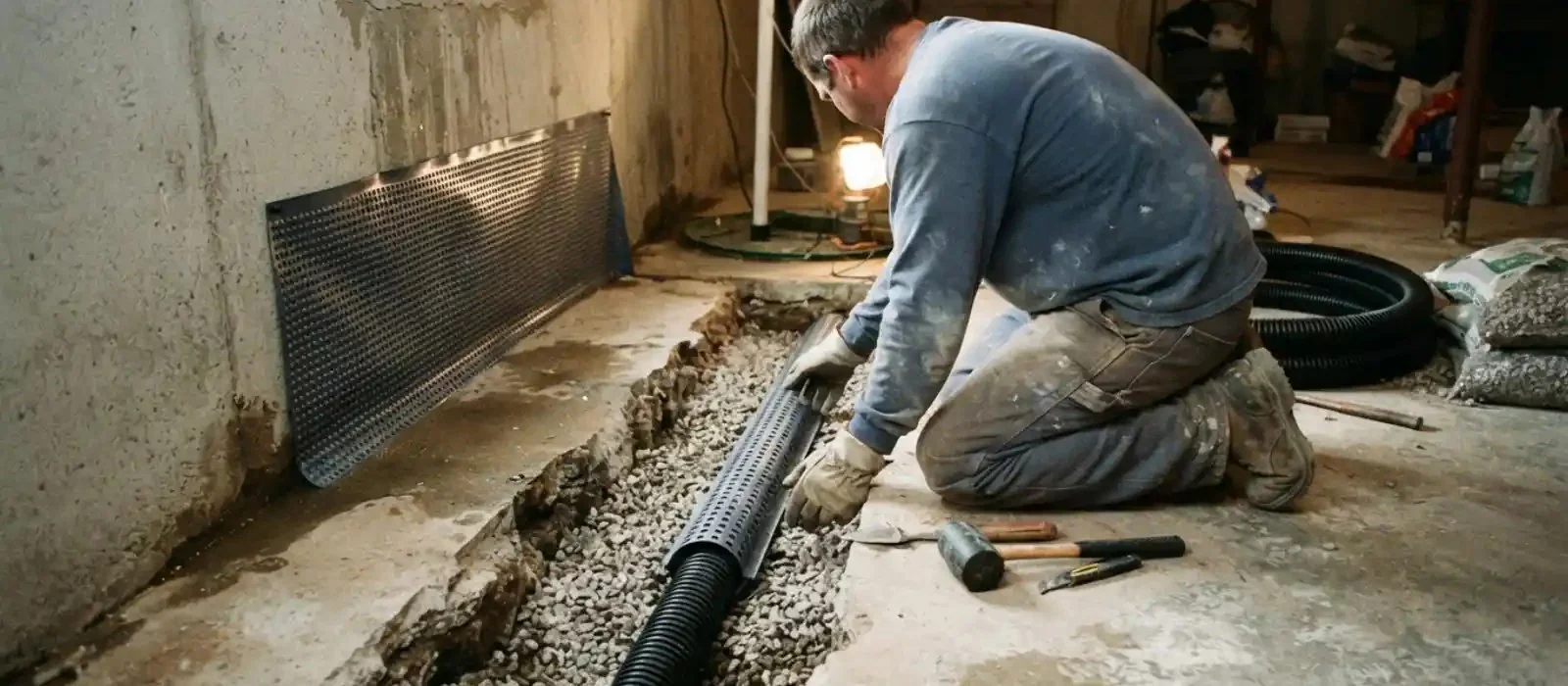
An interior drain is a perforated pipe set in gravel along the inside edge of the basement floor. Water that rises at the footing flows into it and runs to a sump pit, where a pump sends it outside.
The system is only as good as its pump and discharge. A backup pump, an alarm and a clean check valve make it more dependable, and the pit should be inspected each year for silt.
Water coming up through the floor?
Tell us where it appears and when. A short call helps sort groundwater from a drain problem.
Backwater valves and floor drains
A basement floor drain connects to the same sewer system as your toilets. During heavy rain, the public sewer can fill and push water back up the lowest drain it finds. A backwater valve closes when flow reverses and keeps that water out of the house.
A valve must be accessible for cleaning, and it does not help with groundwater. Floor drains also need water in their traps, or sewer gas can rise. Pour a little water into rarely used drains each month.
| Source | Sign | Plumbing-side response |
|---|---|---|
| Groundwater at the footing | Damp or wet floor edges after rain | Interior drain and sump pit |
| High water table | Water in the sump pit most of the time | Stronger pump, backup and discharge review |
| Sewer backup | Water rising from a floor drain | Backwater valve and sewer inspection |
| Leaking pipe | Wet spots away from walls, steady meter movement | Leak detection and repair |
| Wall cracks or window wells | Water streaming from walls | Other trades, not plumbing |
| Roof and gutter runoff | Water at the same spot every storm | Gutters and grading |
Discharge: where the pumped water goes
Pumped water has to leave the house and flow away from the foundation. If it empties near the wall, it returns to the pit and the pump runs all day.
Tying a sump discharge into the sanitary sewer is a decision for the Construction Code Department and the Pennsauken Sewerage Authority, not for a homeowner or plumber alone. Ask them first.
Basements in Pennsauken, NJ
The median home in the township was built in 1964, with older housing in the south and newer construction toward the northeast. Homes of that era often have aging floor drains and slab cracks and may lack a sump, while newer ones can have a pit that has never been tested.
A sewer separation project by the Camden County Municipal Utilities Authority aims to reduce localized flooding. Treat it as background. Water on your floor still needs a plan on your own property.
Source type: US Census ACS data and New Jersey I-Bank announcement
Finishing a basement or building new
If you are finishing a basement, solve water first. Drywall and flooring over a wet slab grow mold and lose their value. In new construction, plan the pit, floor drain and any backwater valve before the slab is poured, because adding them later means cutting concrete.
Our plumbing installation page covers bathrooms and rough-in for finished basements.
What affects the price of basement water control
Interior drain work is priced by length and access. A pump swap is a smaller job. We scope the work after learning where the water enters.
Tell us where the water enters and we give a clear price before work starts. If the cause is outside plumbing, we say so.
What to note before the plumber arrives
Notes on timing help sort the cause.
- Where the water appears and how much.
- Whether it follows rain or appears in dry weather.
- Whether water rises from a floor drain.
- Where downspouts empty outside.
- The age and make of any existing pump.
- Photos of walls, floor cracks and the pit.
Not sure whether it is plumbing?
Walk us through the signs. We will tell you if it is a drain, a pump or a job for a different trade.
Standards and rules behind this advice
Ready.gov and the EPA flood guidelines both recommend check valves on drains and a sump pump with battery backup for flood-prone basements. Plumbing work in New Jersey falls under the state Uniform Construction Code, which the Pennsauken Construction Code Department enforces locally, so any new drain or sump work should be permitted.
Honest answers about basement water
A plumber handles drains, sump systems, backwater valves and discharge. Wall cracks, exterior sealing and grading belong to other trades.
We tell you which part of the problem is ours before any work starts.
Not by itself. It only removes water that reaches a pit. An interior drain helps carry water there, and a backup keeps the system working during outages.
Gutters and grading should be checked as well.
It is a one-way valve on the main drain that closes when sewage tries to flow backward. It protects floor drains and basement fixtures during heavy rain.
It needs access for cleaning. Our sewer camera inspection can check the line first.
The trap may have dried out. Pour water into the drain and the seal returns. If the smell stays, a vent or drain problem may be involved.
Call if sewage appears.
The project's stated aim is less localized flooding, not a promise about any one basement. Keep your own protections in place.
Ask the township about flooding history at your address.
A pipe leak usually continues in dry weather, and your water meter may keep moving with everything off. Groundwater follows rain.
If you suspect a pipe, start with leak detection.
Call the 24/7 line and stay away from water near electrical panels and outlets. A plumber advises on the pump and books a same-day visit if the schedule allows. No arrival time is promised.