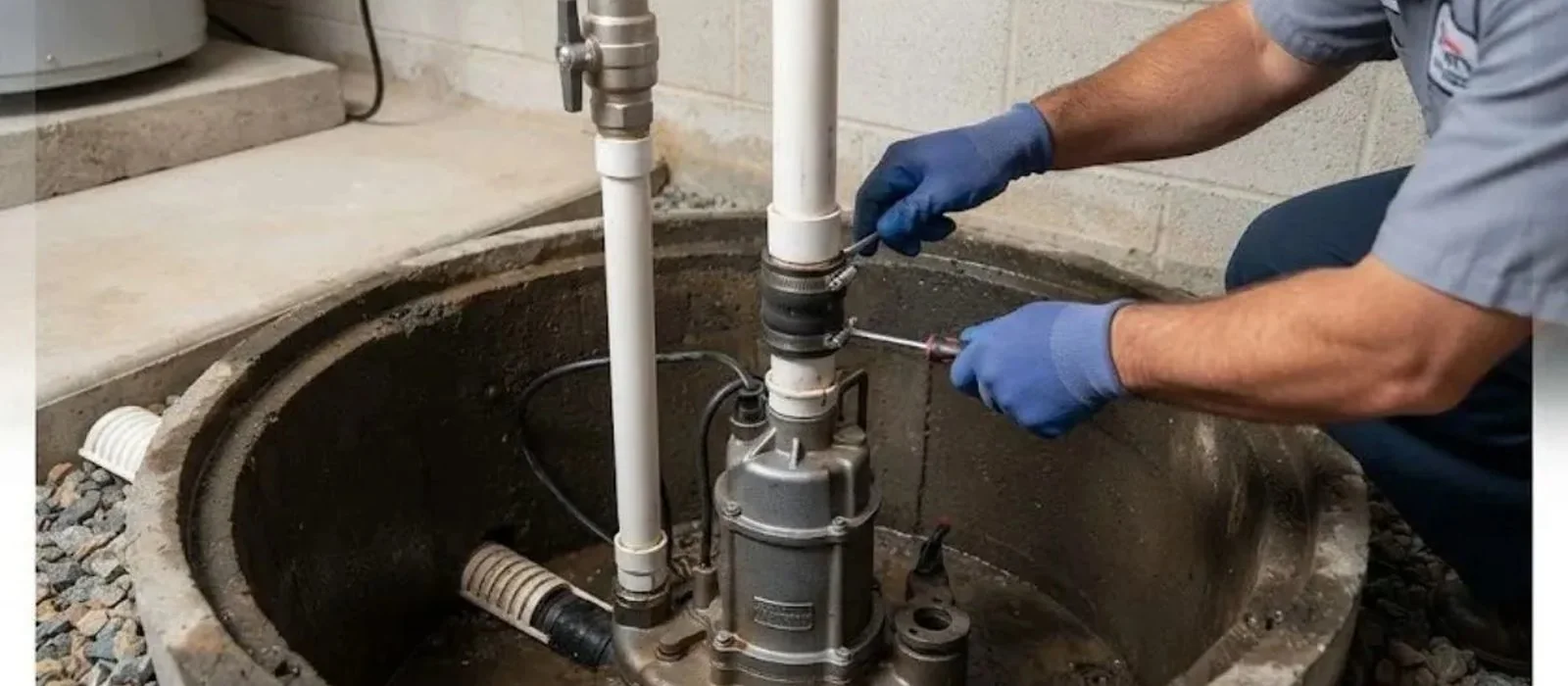
When a stopped sump pump becomes an emergency
A pump that quits during a storm gives you very little time. Once the pit overflows, water spreads across the slab and reaches the furnace, the water heater and anything stored on the floor. We serve Collingswood basements with the same approach.
Do not wade into water if the panel, outlets or extension cords are underwater or wet. Move valuables up, and call for an emergency visit the moment the pit stops draining. Night and weekend storms are exactly when the line is busiest, so call early.
If water is also coming through the floor drain, the problem may be the sewer side rather than the pump. Our basement waterproofing page explains how the pieces fit together.
Pump will not start, will not stop, or never rests
Will not start
Check that the power cord is plugged into a working outlet and that its GFCI has not tripped. Then lift the float by hand. If the pump stays quiet, the motor or switch has failed.
Will not stop
A float stuck against the pit wall or a failed switch keeps the motor running. A running pump with no water can burn out in a short time, so unplug it if you cannot free the float.
Runs constantly
If it empties the pit and refills right away, water may be flowing back from the discharge pipe through a bad check valve. Or the water table may simply be high after heavy rain.
Runs but moves little
A humming motor with weak output often means a clogged intake or a worn impeller. A frozen or blocked discharge line produces the same result.
Float switch, check valve and discharge line
Most sump trouble starts with one of three parts, not the motor itself. Knowing which one is failing saves money, because a switch or valve costs far less than a new pump.
| Part | What it does | Sign of failure |
|---|---|---|
| Float switch | Turns the pump on and off as the water level changes | Pump will not start or never shuts off |
| Check valve | Stops water in the discharge pipe from falling back into the pit | Pump cycles often, with a thump after each run |
| Discharge line | Carries water out of the house and away from the foundation | Water pools at the outlet or the line is blocked by ice or debris |
| Pump motor | Moves the water | Hum with no flow, burning smell, or tripped breaker |
| Pit and cover | Holds incoming water and keeps debris out | Silt buildup, clogged intake, odor |
Pump humming, pit rising?
Describe what you hear and what the water is doing. A licensed plumber can say by phone whether to unplug or wait for a visit.
Backup pumps: battery and water-powered types
A second pump covers two risks: the primary failing and the power going out. Battery backups run on a stored charge and need a charger and a replacement cycle. Water-powered backups use pressure from the water supply and need no electricity, but they draw on the supply while running.
Whether a water-powered unit is allowed at your address is a question for your water provider and the Construction Code Department. A battery backup with an alarm is the more common choice for homes.
Sewage ejector pumps for basement bathrooms
A bathroom or laundry below the level of the sewer line cannot drain by gravity. A sealed ejector pit collects waste and pumps it up to the house drain. It is not the same as a sump pit, and it must never be connected to a storm discharge.
If an ejector alarm sounds, stop using the toilet and sink in that room. Avoid contact with any sewage on the floor and call for service.
Flooding context in Pennsauken, NJ
The Camden County Municipal Utilities Authority is funding a project in Pennsauken to separate combined stormwater and sanitary sewers. The stated aim is less localized flooding and better water quality. It does not change what your own basement needs, so keep the pump working.
Ask the township about local flooding history before you buy. And before tying any discharge into the sanitary sewer, ask the Construction Code Department and the Pennsauken Sewerage Authority.
Source type: New Jersey I-Bank announcement on the CCMUA project and township public pages
Pre-storm sump check
Ten minutes before heavy rain can prevent a flooded basement.
- Pour a bucket of water into the pit and watch the pump start and stop.
- Confirm the discharge outlet outside is clear and the water flows away from the house.
- Check that the cord is plugged into a GFCI outlet that resets.
- Test the battery backup alarm and look at the battery date.
- Lift stored boxes off the floor.
- Keep the 24/7 number where you can find it in the dark.
What affects the price of sump pump work
A new float switch is a small job. A pump replacement with new discharge piping is not. The price depends on what is found in the pit and the pipe.
Phone triage comes first. We ask about the pit, the pump and the outlet, then give a price before work starts.
Storm in the forecast?
Book a same-day check when the schedule allows, so the pump is tested before the rain arrives.
Standards and rules behind this advice
The EPA and Ready.gov both advise that a sump pump with a battery backup is a sensible flood preparation guideline. Wiring for the pump circuit falls under the National Electrical Code (NEC), and discharge connections to the sanitary sewer need approvals, so ask the Construction Code Department first.
Sump and ejector pump questions
Warning signs include odd noises, frequent cycling, a pump that runs without lowering the water and rust on the housing. A pump that has never been tested may also fail when needed.
Pour water into the pit once or twice a season and watch a full cycle.
A high water table after heavy rain, a leaking water line near the foundation or a bad check valve can all refill the pit. A plumber can tell which by timing how fast it refills.
Not without checking. Ask the Construction Code Department and the Pennsauken Sewerage Authority first, since a sanitary connection involves local approvals.
Our plumbing installation team can route the discharge once you know the rules for your address.
A sump pump moves groundwater out of a pit. A sewage ejector pump moves waste from basement fixtures up to the house drain. The ejector pit is sealed and vented.
They are not interchangeable, and they should not share a pit. A basement bath adds the plumbing installation question of where the drain goes.
If a power outage during a storm would flood the basement, yes. Batteries need testing and replacement on a schedule, and the alarm should be checked each season.
For a finished basement, a backup is hard to argue against.
Yes. The line is answered through the night and on weekends, and a plumber will tell you what to unplug and what to leave alone. A same-day visit is booked when availability allows.
No arrival time is promised, and storm nights fill up, so call as soon as the pit stalls.