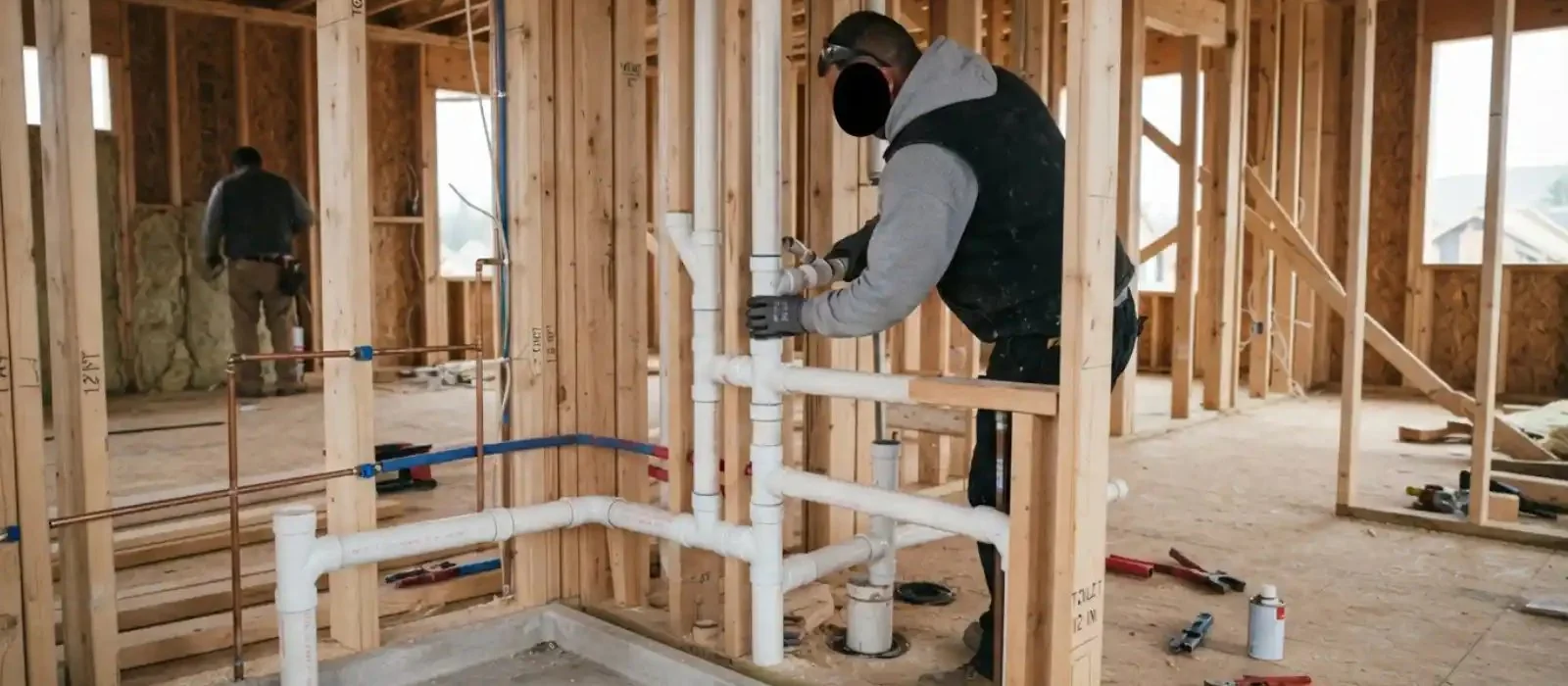
How a plumbing installation job usually runs
Walk the plan
We start with what you want: new fixtures, a moved sink, a new bath or a line to an appliance. Photos and a sketch help on the phone.
Check what exists
Pipe material, shutoffs, drain slopes and vent paths decide what the new work can tie into.
Permit and schedule
The permit is filed with the township, and rough-in is planned before walls close.
Rough-in and inspection
Pipes are run, tested and inspected before drywall or flooring covers them.
Set fixtures and final
Fixtures go on, the system is checked, and the final inspection closes the permit.
Homes in Pennsauken have a median build year of 1964, so many remodels meet cast iron, galvanized steel or early copper. A new line often has to connect to that older pipe, which is why a look at the existing system comes before pricing. If the old pipe is the real problem, see repiping. We also work for homeowners in Collingswood on the same kind of tie-in.
Remodel rough-in and relocating fixtures
Rough-in is the pipe work that happens inside open walls and floors. It is the best time to move a sink, add a shower or upgrade a stack, since the cost of changing it later is far higher.
Moving a fixture is mostly a question of drains. Water lines are flexible, but drains need slope and a vent, so a long move can mean opening a floor or ceiling.
| Job | What it usually needs | Watch for |
|---|---|---|
| Relocating a sink | New supply and drain, plus a vent | Drain slope and distance to the stack |
| Adding a bathroom | New supply, drain, vent and often a larger waste line | Capacity of the existing drain |
| Basement bath | Below-grade drain or an ejector pit | Pumping waste upward |
| Kitchen remodel | Sink, dishwasher and disposal connections | Old shutoffs that no longer close |
| New laundry | Supply, standpipe and drain | Space for a trap and vent |
| New outdoor spigot | Supply tap and shutoff | Winter protection |
New construction plumbing
On a new build or addition, plumbing is planned before the slab or framing. We coordinate the layout of drains under the floor, stacks through the walls and supply runs to each fixture. If a basement is part of the plan, decide on the floor drain and sump pit now, since moving them after the pour is expensive.
Planning a bath or kitchen project?
Call and describe the layout. We will say what the plumbing side involves before demolition starts.
Permits and inspections in Pennsauken
Permits for plumbing work are handled by the township Construction Code Department at 2400 Merchantville Ave. The plumbing permit fee depends on the type of work, so see the township fee schedule for current amounts.
Approvals can involve the Pennsauken Sewerage Authority and the water provider, depending on the job. Ask the department what applies to your project before work begins. An inspection is scheduled after rough-in, and you will want pipes visible for it.
Check the license
Under New Jersey rules, plumbing is performed by a master plumber, an authorized contractor, or employees of one. Ask any plumber for the license number and verify it with the State Board of Examiners of Master Plumbers.
Gas line installation: safety comes first
If you smell gas
Leave the building at once and do not touch switches or flames. From outside, call the gas utility or 911. Plumbers do not replace that call, and we make no promise about a gas response time.
New gas piping for a range, dryer, grill or water heater needs a permit, pressure testing and inspection. Never connect gas appliances yourself, and never skip the test.
Before adding a gas appliance, we check the capacity of the existing line. Fuel changes are covered under water heater installation.
Water softener and filtration: what to know first
Softeners, filters and conditioners do different jobs. A softener removes hardness minerals with salt, a filter removes particles, taste or chlorine, and a conditioner changes how scale forms without removing it.
Start with your water. Ask Merchantville Pennsauken Water Commission, or NJ American Water if that is your provider, for the annual water quality report, and test your tap. Check your bill to see which utility serves you. Then choose equipment for the problem you actually have.
What affects the price of plumbing installation
Installation prices come from the layout, not from the fixture alone. A price is given after the scope is clear.
Call and describe the project. We ask about the layout, give a clear price before work starts and schedule the rough-in around your other trades.
Have this ready before the planning call
A little prep keeps the plan accurate.
- Photos of the area and any existing shutoffs.
- A sketch or drawing of the new layout.
- The brand and model of fixtures you have chosen.
- The age of the house and any known pipe material.
- Your remodel schedule and other trades involved.
- Which water utility is on your bill.
Running a gas or water line to a new appliance?
Tell us what the appliance is and where it will sit. We will explain the permit and testing steps.
Standards and rules behind this advice
Plumbing work in New Jersey falls under the state Uniform Construction Code, which the Pennsauken Construction Code Department enforces locally. Gas piping is covered by NFPA 54, the National Fuel Gas Code, and electrical work follows the National Electrical Code (NEC). A permit and inspection are the normal route for new installation.
Questions about installation work
Permits for plumbing work are handled by the township Construction Code Department. Ask them what your project needs, since we do not guess about exemptions.
We handle the filing for work we do, and the fee depends on the type of work.
Often yes, but the drain is the limiting factor. The new spot needs slope, a vent and room for a larger drain.
In a basement, an ejector pit may be needed. Our sump pump page explains how those work.
Leave the building and call the gas utility or 911 from outside. Do not turn lights or switches on or off.
Do not return until responders say it is safe. A plumber can inspect the piping afterwards.
Not always. Ask your water utility for its annual water quality report and test your tap before buying equipment. A filter, conditioner and softener solve different problems.
We can install whichever fits once you know the water you have.
Sometimes, using access panels, closets or cabinets. It takes longer and may need patching afterward.
If you are about to open walls, tell us first. We can plan lines around the demolition and save you the second repair.
Ask for the license number and verify it with the State Board of Examiners of Master Plumbers. A licensed plumber must show it on invoices and vehicles.
If the plumber cannot provide it, do not hire them.
Yes. The 24/7 line is answered at all hours, and same-day visits depend on the schedule. If a new line is leaking, close the nearest valve first.
Hidden leaks behind new finishes are a job for leak detection.