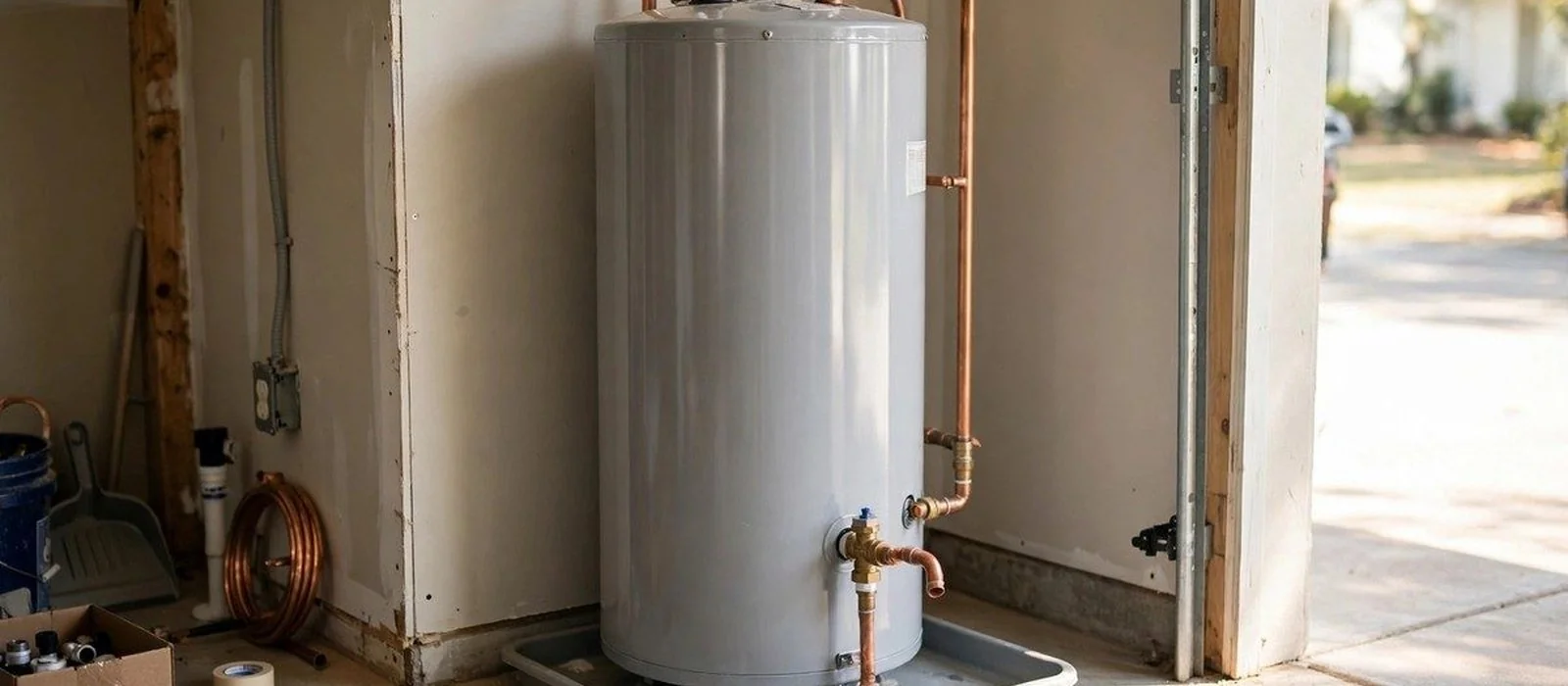
Choosing between tank, tankless and hybrid before you buy
The unit you pick sets the scope of the whole job. A like-for-like tank is the simplest install. A tankless or heat pump hybrid unit changes the gas, venting, electrical and drain work around it.
Use the table as a starting point, then let a plumber look at the actual space. Photos of the current setup help the dispatcher plan what the visit needs.
| Option | Best for | Trade-off |
|---|---|---|
| Standard tank, gas or electric | Straightforward swaps and tight budgets | Limited hot water in a long run, and it takes floor space |
| Tankless | Steady hot water and wall-mounted space saving | Bigger gas line or power draw, venting changes and scale care. See tankless water heater service |
| Heat pump hybrid | Lower energy use in a space with open air | Needs clearance, a condensate drain and a cooler room |
Venting: the part older houses surprise people on
A gas heater must exhaust its combustion gases safely. In homes of the 1960s and earlier, that often means an old masonry chimney that was sized for a larger, older appliance. A modern, more efficient unit can cool the flue gases too much, which can cause condensation and poor draft.
Options include a chimney liner, a power-vent unit that exits through a side wall, or a sealed-combustion model. A plumber checks the flue before quoting, and the result decides which unit you can buy.
Gas line, electric circuit and the other utilities
Gas units need a correctly sized line, a shutoff and a drip leg. Electric units need a circuit with the right breaker and wire size for the element load. Moving from one fuel to the other usually means new work on both sides.
Gas supply
Pipe size and run length decide whether the existing line can feed a bigger or tankless unit.
Electric circuit
Hybrid and electric models call for a dedicated circuit. Panel capacity is checked before anything is ordered.
Condensate drain
High-efficiency gas and hybrid models produce water that needs a safe place to drain.
Relief valve line
The discharge pipe must run to a safe point and never be capped.
Space, combustion air and clearances
A gas heater needs air to burn, and a closet or finished room can starve it. The plumber looks at the size of the space, the louvers or openings and the clearance to walls and shelving.
Hybrid units need open air for a different reason, since they cool the room as they work. A packed utility closet is a poor home for either, and sometimes the better answer is a new spot.
Expansion control and pressure on the supply side
Heating water makes it expand. In a plumbing system with a check valve or backflow device on the supply, that extra volume has nowhere to go and pressure spikes. An expansion tank absorbs it.
Whether yours needs one depends on how the house is plumbed, so the plumber evaluates it on site rather than assuming. If your relief valve has ever dripped on its own, mention that when you call.
Planning an upgrade or fuel change?
Describe the room, the fuel you have now and the one you want. The dispatcher can line up the right visit.
Relocating a heater or changing fuel
Moving a heater to a garage, closet or new utility room means extending hot and cold lines, vent routes and drains. It also raises the odds that the job needs a permit, and it can be a good time to update old shutoff valves. Changing fuel type follows the same logic.
Permits and inspection for a Pennsauken, NJ install
The township Construction Code Department, at 2400 Merchantville Ave, handles permits for plumbing work. Township code lists approvals that can involve the Camden County health department, the Pennsauken Sewerage Authority and your water provider, depending on the work.
The practical point: a relocation or fuel change is more likely to involve those approvals than a simple swap. Ask early, and schedule around the inspection, not just the install day.
Source type: Pennsauken Township Code Chapter 133
New construction and remodels
In a remodel or addition, the heater location is decided on paper before walls close. Rough-in goes in early, with a pan, drain, vent path and circuit planned together. Our plumbing installation page covers the rest of a new build or remodel scope, and a basement finish may also touch sump pump placement.
What affects the price of a water heater installation
Install price rises with the work around the heater, not just the heater itself.
You describe the plan by phone, then the plumber looks at the space. A clear price is given before work starts, and changes are agreed before they happen.
Before the visit
Take photos of the current heater, flue, pipes and electrical panel. Note the fuel, tank size and any nearby chimney.
On install day
Clear a work area, secure pets and plan for the water to be off for part of the day. Tell the plumber about parking and stairs.
After the install
Learn where the shutoff, relief valve and temperature setting are. Keep the paperwork handy for any inspection.
Install-day preparation checklist
Run through these the evening before.
- Photos of the old heater, flue and panel sent or ready
- Clear floor space and a path from door to heater
- Plans for hot water being off for part of the day
- Permit questions raised with the plumber
- Choice made on fuel, size and type
Ready to scope the job?
One call gets you triage, a visit and a price before work starts.
Standards and rules behind this advice
Gas storage heaters are built to ANSI Z21.10.1, and Department of Energy guidelines for heat pump models call for a room of adequate volume and air temperature between 40 and 90 degrees Fahrenheit. Plumbing work in New Jersey falls under the state Uniform Construction Code, which the Pennsauken Construction Code Department enforces locally.
Installation questions before you plan
A plumber inspects the flue size, condition and draft before anything is sold. Older masonry chimneys often need a liner or an alternate vent route with efficient units.
No. It depends on whether the plumbing is a closed system, for example with a backflow device or a pressure-reducing valve. The plumber evaluates your setup rather than guessing.
Yes, with added work. Gas to electric needs a new circuit and often panel review. Electric to gas needs a gas line, venting and a combustion air check. Both may involve approvals, so ask about replacement basics and the permit.
No. The line is open at all hours, but planned installs are scheduled for regular visits. Same-day appointments are possible when the schedule has room.
Often, especially for relocation or fuel changes. Ask the Construction Code Department at 2400 Merchantville Ave, or have your plumber confirm. Fees are on the township fee schedule.
Yes, and it is easier then. Rough-in, venting and the drain can be planned before walls close, and neighbors in Collingswood often plan the same way.
Usually yes. Flex connectors, shutoffs and relief valves are inexpensive next to the labor of opening everything up. A plumber will point out any that look worn while the unit is out.