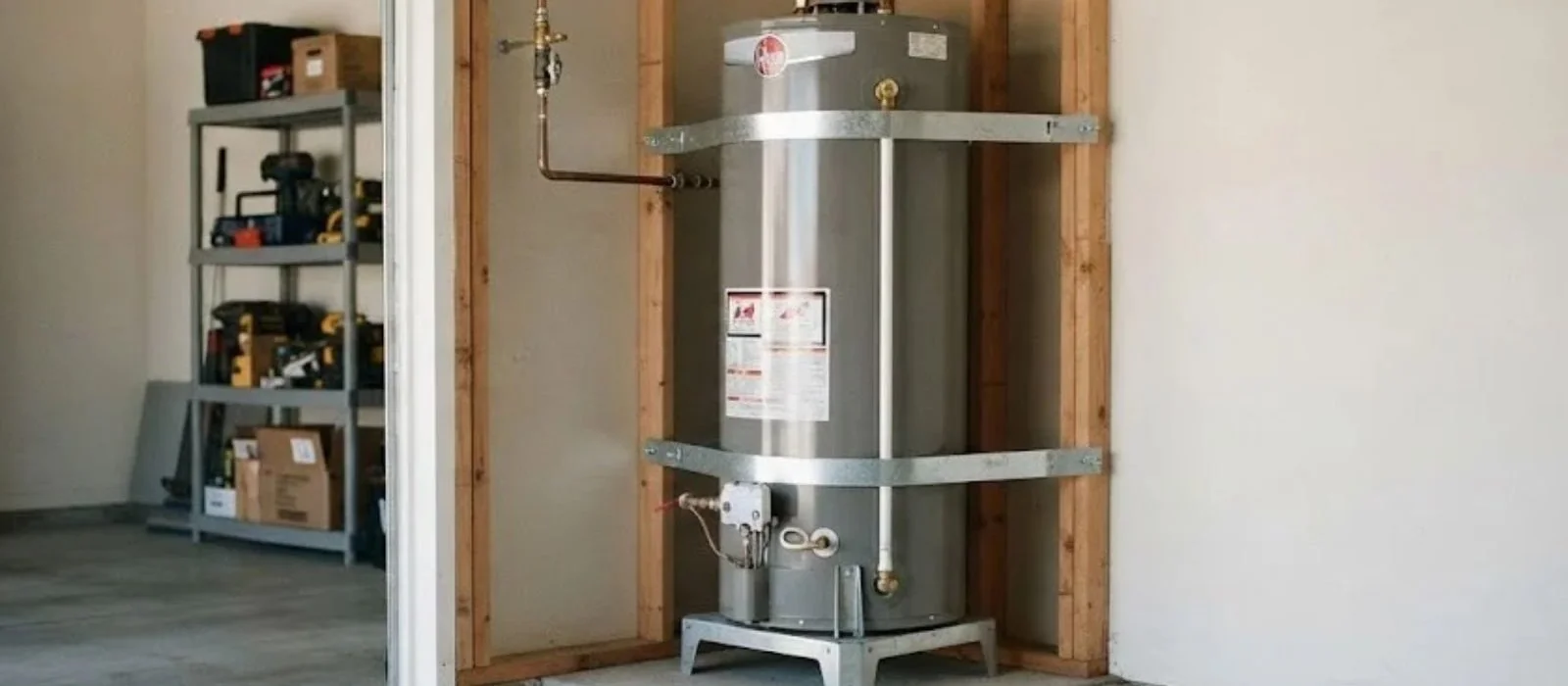
The phases of a water heater job
Think of the work in stages rather than hours. Each stage can go smoothly or can uncover something that needs attention.
First comes shutdown and draining, then removal of the old unit, then setting and connecting the new one, then filling, venting, testing and a check of the safety valve. A permit and an inspection sit around those steps when the work requires them.
Phone triage and job type
We ask about fuel, size, location and symptoms, then sort the job into like-for-like, conversion or tankless.
Shutoffs and draining
Power or gas is turned off, the cold supply is closed and the tank is emptied through a hose to a safe drain.
Removal and setting
The old unit comes out and the new one is set on a level base, with a drain pan where the space calls for it.
Connections and venting
Water lines, gas or electric, flue and relief valve piping are connected and checked.
Fill, test and inspect
The tank is filled, air is bled, controls are tested and the inspection is arranged if a permit applies.
Which kind of job takes longer
| Job type | What is involved | What can stretch the schedule |
|---|---|---|
| Like-for-like tank swap | Same fuel, same location, same hookups | Seized shutoff valves, corroded fittings, tight access |
| Fuel change | New gas line, vent or electric circuit | Extra trades, inspection of the new work |
| Tank to tankless | New venting, bigger gas line, wall mounting, condensate | Gas line capacity, finding a route for the vent |
| Heat pump hybrid | Condensate path, circuit and a large enough space | Clearance, air volume and electrical capacity |
Heat pump models are pickier about location. The Department of Energy lists a year-round temperature band and a minimum volume of surrounding air as requirements. A small or cold basement can turn a simple swap into a search for the right spot.
Water heater out right now?
If you have no hot water or a leaking tank, call the 24/7 line. We schedule same-day appointments when available and explain the likely scope on the phone.
What can slow things down in older Pennsauken homes
The median home in Pennsauken was built around 1964, and the oldest housing stock sits toward the south of the township. Homes of that era often have older shutoff valves, galvanized fittings or flues that were sized for a previous heater.
When a valve will not close or a union breaks, the job adds a repair before the new unit goes in. That is not padding. It is the work that keeps the new heater from leaking on day one.
Permit and inspection timing in Pennsauken
Under the township's uniform construction code chapter, most construction needs a permit, with an exception for ordinary repairs. Plumbing permits come from the Construction Code Department, 2400 Merchantville Ave, phone 856-665-1000.
What this means for your schedule: if your job needs a permit and inspection, the work may be finished before the inspection happens. Ask the department how inspections are scheduled for your job so you know when to be home.
Source type: Township of Pennsauken municipal code, Chapter 133 (Uniform Construction Codes), and the Construction Code Department contact listing
What to prepare before the crew arrives
Prep list for install day
A clear path saves time in any job type.
- Move stored items away from the heater and the path to it
- Clear stairs and the route from the driveway to the basement
- Know where your main water shutoff is
- Keep pets in another room
- Tell us if anyone in the house needs hot water for medical reasons
- If you smell gas, leave and call your gas utility or 911 first
Tankless installs and the gas line question
A tankless swap usually takes the longest of the common jobs, because venting and gas capacity are checked before anything is mounted. If the existing gas pipe is too small, it has to be upsized.
Our tankless water heater page explains that sizing process in more detail. For households nearby, the Maple Shade plumber page covers how we handle jobs just across the Burlington County line.
What affects both time and price
The same factors that stretch a schedule also change the quote.
We give a price by phone and confirm it before work starts. We do not promise hours, but we do tell you which phase is most likely to take extra time.
Standards and rules behind this advice
According to the Department of Energy, heat pump water heaters need a minimum room volume and air temperature range, which can change how long an installation takes.
What to do before the install day
A little preparation keeps the visit on schedule.
- Clear a path and the space around the old heater.
- Know where the main water shutoff is.
- Check the date code on the old unit's data plate.
- Plan for the water to be off for part of the visit.
Timing questions we hear about water heater installs
Same-day appointments are offered when the schedule allows, and the 24/7 line is answered around the clock. Whether the job finishes that day depends on the job type, parts on hand and access. We tell you what to expect on the phone.
No. The old unit has to be shut off and drained before it comes out, and the new one needs time to heat after filling. Plan to avoid showers and laundry until the crew tells you the heater is ready.
The permit and inspection are separate from the hands-on work. Pennsauken's Construction Code Department handles them at 2400 Merchantville Ave, and its listing is 856-665-1000. Ask how inspection scheduling works for your job type, since the department sets that, not the installer.
Often yes, because venting, gas capacity and wall space have to be checked first. Our Cinnaminson plumber page covers how we handle homes on the Burlington County side, and the same approach applies.
Only at the edges. According to MPWC, the commission owns pipes from the main to the curb stop, and the owner is generally responsible for everything after it, including interior plumbing. That means the heater hookups are on your side, and we work from the shutoffs in your home. Check your bill to see whether you are on MPWC or New Jersey American Water.