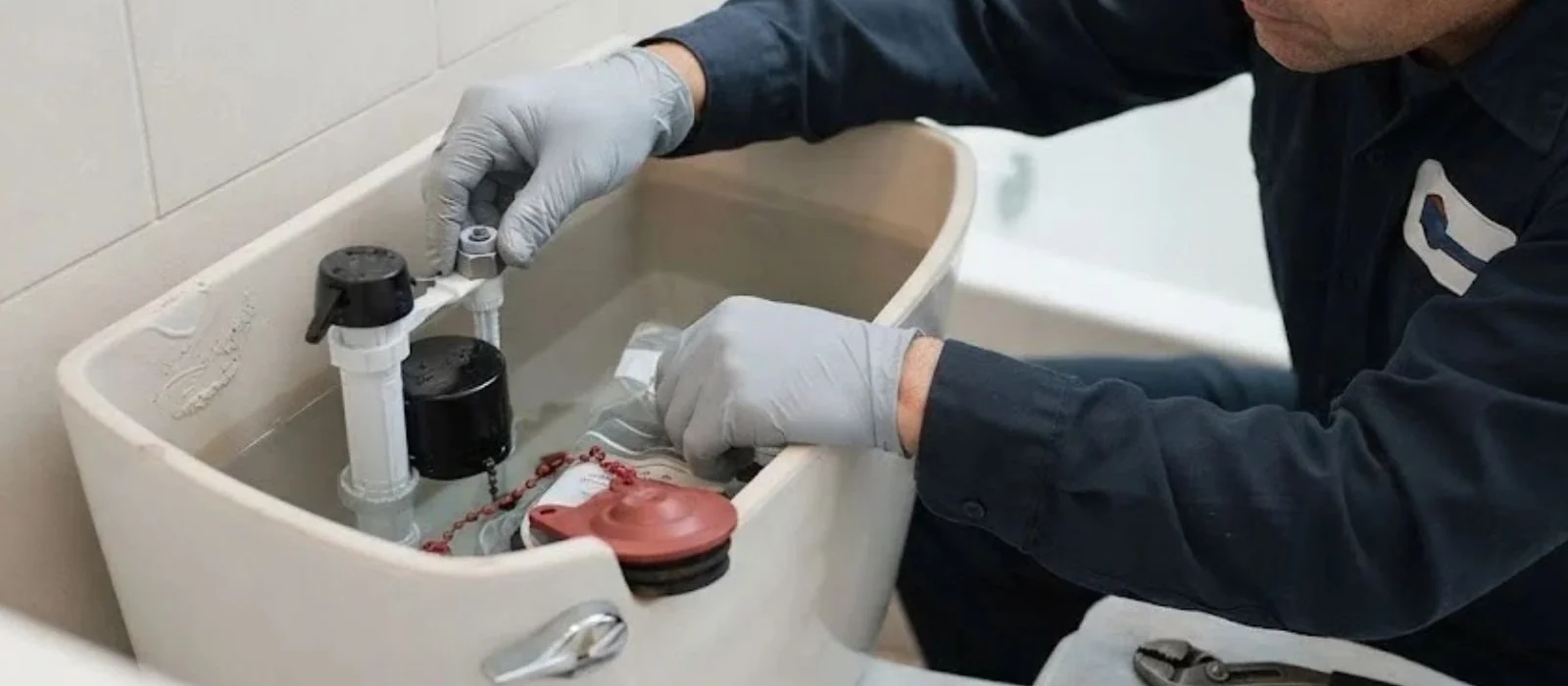
The usual suspects behind a clogged toilet
Flushing the wrong item is the leading cause, and the label on the package does not always help. Wipes marked flushable are a good example. The Camden County Municipal Utilities Authority says that even wipes labeled flushable do not break down, are a major cause of clogs, and that only toilet paper should be flushed.
The same CCMUA page lists paper towels, tissues, feminine hygiene products, cotton swabs, hair, kitty litter and grease among items that do not belong in drains or toilets.
Wipes and paper towels
They hold together in water and catch on the bend in the trap.
Too much paper at once
A heavy load can stall a bowl, especially a low-flow model.
Low-flow bowl wear
Mineral buildup in the rim holes weakens the flush.
Small objects
Toys, brush heads and cotton swabs lodge deep in the trap.
Blocked vent
A slow drain with gurgling may mean the vent stack is restricted.
Is it the toilet or the line?
Test the other fixtures before you start plunging. Run a bathroom sink and flush a second toilet if you have one. Watch the lowest drain in the house, often a basement floor drain or a first-floor tub.
If several fixtures react, the blockage is likely in the branch or the main line, and plunging the toilet will not fix it.
| What you see | Likely location | First step |
|---|---|---|
| One toilet slow, others fine | The toilet or its trap | Plunge or use a toilet auger |
| Bowl bubbles when the tub drains | Branch line or vent | Stop using water and call a plumber |
| Multiple fixtures slow, floor drain bubbles | Main line | Stop water use and call |
| Toilet flushes weakly but drains eventually | Rim holes or a partial blockage | Clean the rim, test again |
| Sewage smell with standing water | Main line backup | Avoid contact, call right away |
Toilet and drains both backing up?
That points to the line, not the bowl. Call the 24/7 line before you run another load of water.
Plunger or auger: which tool for which clog
What you can try yourself
- A flange plunger with a good seal on the drain
- A toilet auger for a clog just past the bowl
- Warm water and a little dish soap to loosen paper
- Stopping the water supply if the bowl rises
When to call a plumber
- More than one fixture is backing up
- Sewage is coming up from a floor drain
- The toilet clogs again within days
- A toilet auger meets resistance or you suspect an object
Use a plunger gently at first, since an aggressive push can splash. An auger reaches past the bend, but it should be used with care to avoid scratching the porcelain. If a dropped object is lodged inside, forcing it can wedge it tighter.
Avoid chemical drain openers. Bowls and old pipes do not respond well to harsh products, and the chemicals are a hazard if the toilet has to be worked on afterward.
Older pipes and partial blockages
The median home in Pennsauken was built around 1964, and the oldest housing stock is in the south of the township. Homes of that era often have older drain lines that develop rough interiors or roots at joints, so a partial blockage keeps catching paper.
If a toilet clogs again and again even when you use little paper, the line may be the cause. Our drain cleaning team can run a camera and find the spot.
Pennsauken sewer system and what to flush
Most Pennsauken homes are on public sewer, collected by the Pennsauken Sewerage Authority and treated by the Camden County Municipal Utilities Authority. CCMUA customer service can be reached at 856-541-3700 on weekdays, and its website lists guidance on what not to flush.
For you, the practical point is that a wipe that gets past your own trap can still snag in the public line downstream. If your own drain keeps clogging, call a plumber before assuming it is the street.
Source type: Camden County Municipal Utilities Authority public website and Pennsauken Sewerage Authority listing on the township site
What to do while you wait
These steps protect your floor and keep the problem from growing.
- Stop flushing and stop running water in the house
- Lift the tank lid and set the float so the tank does not refill
- Close the supply valve behind the toilet if the bowl is rising
- Lay towels around the base and keep children away
- Do not touch standing sewage with bare hands
- Turn off power only if the area around outlets is dry and safe
What affects the cost of clearing a clog
A single toilet clog and a main line backup are different jobs.
We triage by phone and give a price before work starts. No numbers are quoted until we know whether it is the toilet or the line.
Standards and rules behind this advice
The Camden County Municipal Utilities Authority guidelines state that only toilet paper should be flushed, and that wipes labeled flushable do not break down.
Toilet clog questions answered
Low-flow bowls need a clean rim and trap for a strong flush, and old drain lines can hold up paper. If it clogs often, the problem may be the line, not your habits. A camera inspection tells us which, and our Collingswood plumber page covers the same approach in nearby towns.
Yes. Drains need air behind them to flow properly, and a blocked vent can cause gurgling and slow flushing. It usually affects more than one fixture, so test the sinks and tub as well.
We advise against it. Chemical openers can damage old pipes and leave a hazard for whoever has to work on the line next. A plunger or toilet auger is safer for a bowl clog.
CCMUA, which treats Camden County sewage, says only toilet paper should be flushed and lists wipes, paper towels, tissues, hygiene products and grease as things to keep out. That applies in Pennsauken whether your wipes say flushable or not.
Call when more than one fixture backs up, when sewage is rising, or when a toilet clogs again soon after you clear it. A neighbor in the Maple Shade area would get the same advice. The 24/7 line is answered for urgent backups.