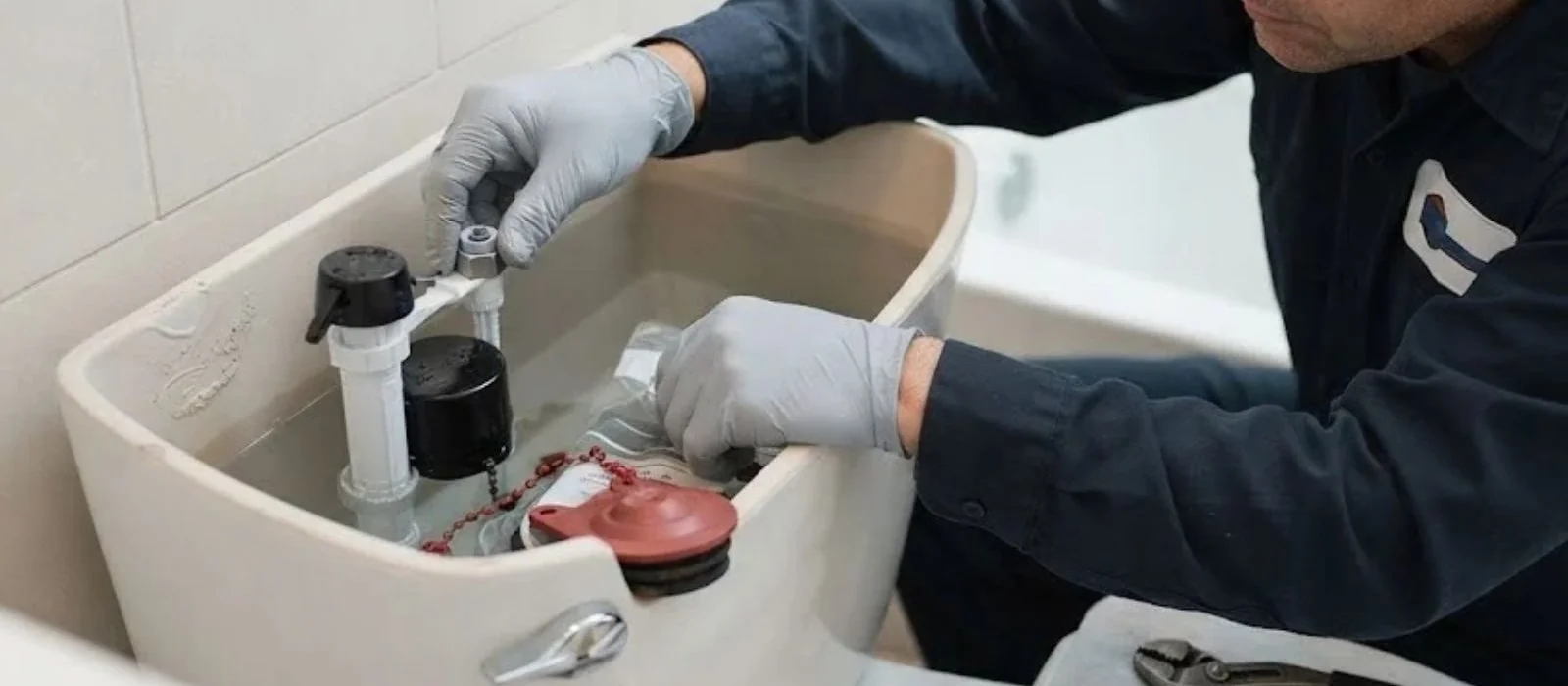
Toilet overflowing or leaking: the emergency steps to take first
Stop the water coming in
Reach behind the bowl and turn the small oval or round handle at the wall or floor clockwise. If it will not turn, lift the tank lid and push the float or flapper down.
Keep the bowl from refilling
Do not flush again. A second flush on a blocked line sends more water over the rim.
Protect the floor
Lay towels around the base, and move rugs out of the way. If the water looks like sewage, avoid touching it and wear gloves.
Check for a hidden source
If water is coming from the base, the supply connection or the ceiling below, tell us. A leak under a bathroom can run into the floor before it shows.
An overflow is an emergency if the water is spreading, is not clean, or has reached a ceiling or outlet. Stay away from wet electrical areas and shut breakers only if you can reach the panel on dry ground. We answer the line at night and on weekends, and schedule same-day visits when availability allows.
| What you notice | Likely cause | Typical fix |
|---|---|---|
| Water runs after the flush ends | Worn flapper, bent chain or tired fill valve | New flapper or fill valve, usually a short repair |
| Weak or slow flush | Clogged rim jets, low tank water or a partial blockage | Clean the jets, adjust water level or clear the line |
| Bowl rocks side to side | Loose bolts, uneven floor or a failed seal | Reset the toilet on a new wax ring and level it |
| Water at the base | Failed wax ring, loose closet bolts or a damaged flange | Pull, replace the seal and repair the flange if needed |
| Puddle at the wall | Cracked or loose supply line or shut-off valve | Replace the supply line or the valve |
| Sweating tank | Cold tank, warm room, not a leak | Insulated tank liner or a mixing valve |
Running toilet: the quiet water waster
A toilet that hisses, refills on its own or keeps trickling after the flush wastes water around the clock. Most of the time it is one of two parts: the flapper that seals the tank, or the fill valve that controls the refill.
A quick test: drop a few drops of food coloring in the tank, wait without flushing, and look in the bowl. Color showing up means the flapper is leaking. A water level that is too high, spilling into the overflow tube, points to the fill valve instead.
Toilet running or leaking?
Tell us what you hear and see. The plumber replaces the failed part and tests the toilet before leaving.
Toilet repair, part by part
Flapper and chain
The rubber seal wears out, hardens or warps, and the chain can snag. Replacing the flapper is a small repair.
Fill valve
This is the tall assembly that refills the tank. It can stick, hiss or fail to shut off, and replacement is routine.
Wax ring and flange
The seal sits between the bowl and the drain flange. A rocking toilet or a stain at the base often means it has failed.
Supply line and shut-off
Braided lines and old valves can weep at the nuts. A valve that will not close is replaced so the next repair is easier.
Handle and lift arm
A loose or corroded handle can leave the flapper partly open. The fix is a simple adjustment or a new handle.
Leak at the base and rocking toilets
When water appears around the base, the cause is usually the wax ring seal, loose bolts or a damaged flange, not the tank. Pulling the toilet shows what is underneath. A flange that is cracked, corroded or sits below the finished floor can keep the new seal from holding.
Rocking and leaking go together. A toilet that moves breaks the seal each time someone sits, so shimming or tightening alone seldom lasts. We reset the bowl on a new seal and check the floor under it, because soft subfloor is a common find when a leak has run for a while.
Weak flush or a clog: repair or drain cleaning?
If the bowl fills, drains slowly and then clears, the passage may be partly blocked, and a plunger is a fair first try. If other drains in the house also slow down, or a plunger fails, the problem is in the line. In that case, our drain cleaning service is the right call.
A repair is the answer when water leaks, the tank runs, the bowl rocks, or the flush is weak even with a clear line. Many low-flow problems are mineral buildup in the rim jets, which is a cleaning job, not a replacement.
Installing or replacing a toilet
A toilet is worth replacing when the porcelain is cracked, when repeated repairs no longer hold, or when the old unit uses far more water per flush than current models. Before you buy, measure the rough-in, which is the distance from the finished wall to the center of the drain. Twelve inches is common, but measure rather than assume, since some bathrooms differ.
Also check bowl shape, height and clearance around the bathroom. A toilet that is the wrong size for the space is annoying to use every day. Bring the measurements to the call, and we can help you choose.
Repair makes sense when
- The tank, bowl and porcelain are sound.
- The problem is a flapper, fill valve, seal or supply line.
- The toilet flushes well when working.
- You are happy with how the unit looks and sits.
Replacement makes sense when
- There are cracks in the bowl or tank.
- Repairs keep returning.
- Flush performance is poor even after cleaning.
- You want a taller, more efficient or better-fitting model.
Water-saving models and the WaterSense label
WaterSense is a real EPA program that labels toilets meeting its water efficiency and performance criteria. If you are replacing a toilet, look for the label on the box, and check the specifications for the model you choose. A lower-flow toilet uses less water, which can show up on your utility bill.
Need a new toilet installed?
Share your rough-in and the room size. We help you pick a fit, then install and test it.
Pennsauken bathrooms and the supply line behind them
With a median build year of 1964, many Pennsauken bathrooms still have older shut-off valves, rigid supply tubes and a closet flange that has seen decades of use. Those older parts are the usual reason a simple toilet repair turns into a valve replacement.
Most homes are on public sewer through the Pennsauken Sewerage Authority, so a repeated backup is a drain-line issue, not a septic one. If a project needs a permit, the township office that issues it is separate from us, and we flag that at the start.
Source type: Census housing data and Pennsauken Sewerage Authority listings on pennsauken.gov
What affects the price of toilet work
A toilet repair can be a part swap or a full reset, so the price follows the work, not the fixture.
We start with phone triage. A licensed plumber then looks at the toilet, and you hear a clear price before work starts.
Have these ready for the call
These details help us bring the right parts the first time.
- Brand or age of the toilet if you know it.
- Whether water leaks at the base, the wall or the tank.
- The shut-off valve type and whether it closes fully.
- The rough-in measurement, if you are replacing the toilet.
- Photos of the tank interior, if you can safely take them.
If a toilet problem is part of a bigger water issue, our leak detection work can trace the source. Bathroom sink and tub fixtures are covered on our faucet and sink repair page, and we take the same calls in Cherry Hill when the problem is just across the township line.
Standards and rules behind this advice
Federal rules cap new toilets at 1.6 gallons per flush, and the EPA WaterSense label marks models at 1.28 gallons per flush or less that also pass flush performance tests. If you are replacing a toilet, that label is a useful guideline to shop by.
Toilet repair and installation questions
Yes. An overflowing toilet at midnight or on a holiday weekend is a normal reason to call. We coach you through closing the valve, then offer a same-day appointment if one is open. No arrival time is promised ahead of the call.
Most often a worn flapper or a fill valve that does not shut off. Check for color in the bowl after adding dye to the tank. A hissing sound after the tank fills suggests the fill valve. Both repairs are usually done during one visit.
Usually a failed wax ring, loose bolts or a damaged flange. Sometimes it is sweating or a supply connection dripping. Do not keep using a toilet that leaks at the base, since water can soak the subfloor.
Sometimes, if the bolts are loose and the floor is flat. More often the seal has already broken, and the toilet should be reset on a new wax ring and leveled. We check the flange and floor at the same time.
Measure the rough-in from the finished wall to the center of the closet bolts, or the drain. Twelve inches is common, but always measure. Also note the available space around the bowl, so the new toilet fits comfortably.
WaterSense is an EPA labeling program for water-efficient products. A labeled toilet uses less water per flush, which lowers usage over time. Check the specifications, and compare models for performance as well as the label.
If several fixtures drain slowly, or a plunger does not clear the bowl, the blockage is in the line. See our drain cleaning page. If only the toilet misbehaves and water leaks or runs, repair is the answer.