What waterproofing means in a new basement
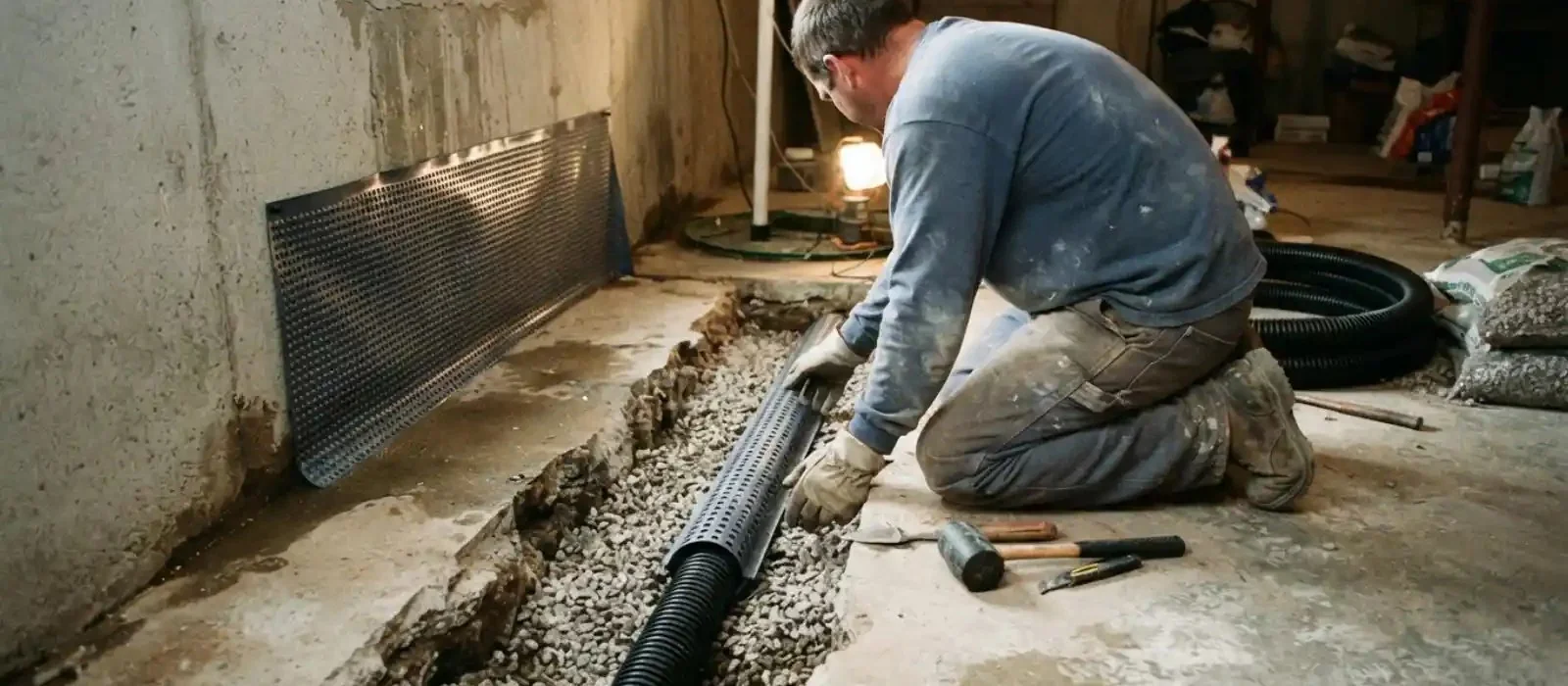
Waterproofing on a new foundation is a set of layers. The foundation wall gets its coating or membrane, and drainage collects water around the footing and under the slab. The plumbing side moves that water out through a sump pit and a discharge line, and keeps sewage from coming back in.
These layers work together. A perfect wall coating still fails if groundwater has nowhere to go, and a good sump pump still struggles if the drain system under the slab was left out. Plan the water path as a whole before the pour.
The plumbing pieces, in the order they go in
Under-slab drain lines
Before the slab goes down, drain lines are set in the gravel base. They carry the building's waste lines and, where planned, a perimeter drain that leads to the sump pit.
Sump pit rough-in
The pit is set in the gravel, level and at the right depth, with a sealed lid in mind. Water-collecting pipes tie into it before the concrete covers them.
Discharge line routing
The line that carries pumped water out must be planned to exit away from the foundation and the neighbor. It needs a check valve and a route that will not freeze shut.
Backwater valve on the sewer line
A backwater valve is installed on the building drain to stop sewage from flowing back from the street. It must be accessible for cleaning after the floor is finished.
Pump, power, and alarm
The pump needs a dedicated protected outlet. A battery backup and a high-water alarm are easy to plan now and awkward later.
| Decision | Do it at rough-in | If left until later |
|---|---|---|
| Sump pit and drain tile | Set in gravel before the pour | Cut and break the slab to add one |
| Backwater valve | Placed on the building drain, accessible | Open the floor to install it |
| Floor drain location | Set with the slab slope | Moves are limited by pipes under the slab |
| Discharge line route | Planned with the grading and landscaping | Routes may cross finished areas |
| Battery backup space | Outlet and shelf included in the plan | Retrofit is possible but harder to hide |
| Utility sleeves and penetrations | Sealed during wall work | Sealing later means access problems |
Planning plumbing under a new slab?
Share your plans with the dispatcher and a plumber can explain what to settle before the pour and what to bring to the township.
Inspection timing and the Construction Code Department
In Pennsauken, permits for plumbing work are handled by the township Construction Code Department. The township code requires a permit for construction except ordinary repairs, and lists plumbing permits and fees. Ask the department which inspections apply to your project and in what order.
The practical rule is to get the answer before the pour. Underground work is hidden once concrete covers it, so inspection timing has to be known in advance. Your plumber or builder should schedule these steps and confirm with the department.
Questions to settle before the slab is poured
Bring this list to the plumber and to the township office.
- Which inspections apply to the underground plumbing and in what order
- Who pulls the permit and who is on site for the inspection
- Where the sump pit, discharge line, and backwater valve will go
- Whether the building drain connects to public sewer through the Sewerage Authority
- Where the cleanouts will be after the floor is finished
- Where the outlet and space for a backup pump will be
Sump, backwater valve, or both?
A sump pit and pump handle
- Groundwater collected from the perimeter drain
- Water rising under the slab
- Water from storms that soaks into the soil
A backwater valve handles
- Sewage flow coming back from the street main
- Backups when the public sewer is overloaded
- It does not remove groundwater
They solve different problems, which is why a new basement often gets both. Ready.gov advises installing check valves, a related device, as part of flood readiness. Your plumber can explain how a valve on the building drain would work with your fixtures.
A plumber doing plumbing installation can plan the rough-in for a new basement, and basement waterproofing advice covers how the drain system fits with the wall and floor.
What affects the price of the plumbing side of waterproofing
Pricing depends on the plan, so it is set after the plumber sees the drawings or the site.
After phone triage and a look at the plans, the price is given before work starts. If the site changes, the plumber explains the change first.
What Pennsauken builders and owners should know about permits and sewers
The Construction Code Department is at 2400 Merchantville Ave in Pennsauken, and the plumbing subcode office is reachable at 856-665-1000, extension 1406. The township code ties some approvals to the Camden County Department of Health, the Pennsauken Sewerage Authority, and the water provider. Ask which of these your project needs.
Most Pennsauken homes are on public sewer, with local collection by the Pennsauken Sewerage Authority and treatment by CCMUA. That makes a backwater valve a conversation to have with the department and your plumber, not an assumption.
Public pages from CCMUA also describe sewer separation work in the township. That is a utility project with no published effect on individual lots, so ask the Sewerage Authority what, if anything, it means for your street before you design the drain connection.
Source type: Pennsauken township code and Construction Code Department, CCMUA and NJ I-Bank public pages, Ready.gov public pages
Standards and rules behind this advice
The New Jersey Uniform Construction Code governs permits and inspections for new plumbing, and Ready.gov flood guidelines recommend check valves and a backup pump.
New basement plumbing and waterproofing questions
Yes, but it means cutting and breaking the concrete, digging the pit, and patching the floor. It costs more time and mess than setting it before the pour.
If the basement is already finished, ask a plumber about what a retrofit would disturb.
That depends on the building drain, the fixtures below street level, and local requirements. Do not assume. Ask the Pennsauken Construction Code Department and your plumber.
A valve placed on the building drain only works if it can be reached for cleaning.
Usually the builder handles the wall coating and drainage layout, and the plumber handles the pit, discharge, drain lines, and valve. Both must agree on levels and locations, since the pit and drains sit under the slab.
Put the split in writing before the work starts, including who orders each inspection.
Ask the Construction Code Department at 2400 Merchantville Ave. The township handles plumbing permits and inspection scheduling, and the answer depends on the exact work planned.
Get the answer in writing if you can, and do not pour concrete over underground pipe until the required inspection is done.
Each town has its own construction office, so the process can differ. A project in Pennsauken follows the Pennsauken Construction Code Department, even if your plumber also works in Cherry Hill or Maple Shade.
Check with the town where the house sits.