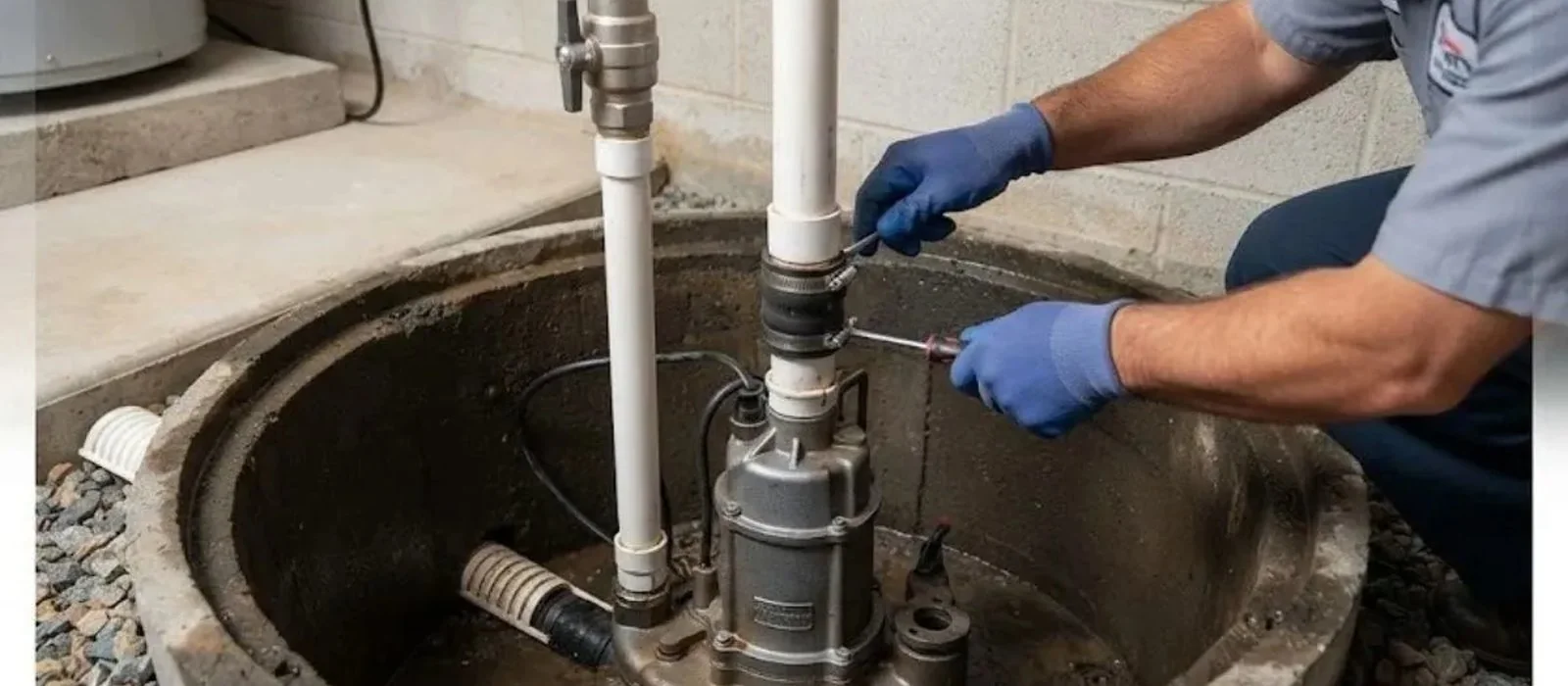
How a battery backup sump pump works
The main pump runs on household power and sits at the bottom of the pit. A second pump, mounted a little higher, waits on its own float switch. If the water climbs past the main pump's on level, because the main pump failed or the power is out, the backup turns on.
The battery system includes a deep-cycle battery, a charger that keeps it topped up, and often an alarm. Ready.gov, the federal preparedness site, suggests considering a sump pump with a battery, which is the idea behind this setup.
Battery or water-powered: which backup fits your basement?
| Feature | Battery backup | Water-powered backup |
|---|---|---|
| Power source | Deep-cycle battery and charger | Water pressure from the house supply |
| Works in an outage | Yes, until the battery runs down | Yes, as long as water pressure holds |
| Run time | Limited by battery size and condition | Not limited by a battery |
| Water use | None | Uses household water while it runs |
| Maintenance | Battery age, charger, terminals | Check valve, venturi, supply line |
| Best for | Most homes, short to medium outages | Homes with reliable water and a dependable supply |
| Trade-off | Battery wears out and must be replaced | Water use, and typically less flow than a battery pump |
Battery systems are the common choice because they pump more water and are easier to understand. Water-powered units remove the battery, but they add to your water use while they run, and they depend on the supply staying under pressure.
If you are unsure which suits your basement, a plumber doing sump pump installation can size the backup to the pump, the pit, and how fast water has entered in past storms.
Planning a backup before the next storm?
Tell the dispatcher how your sump pit is set up now, and a plumber can explain which backup type fits it.
What installation involves
Check the pit and the main pump
The pit needs enough room for a second pump and its float. A pump near the end of its life may be better replaced at the same visit.
Set the backup float height
The backup float sits slightly above the main pump's float so it only starts when needed. Both must move freely without touching the pit wall.
Run a separate discharge or tie in correctly
Each pump needs its own check valve to stop water falling back into the pit. A shared discharge needs a proper fitting.
Mount the battery and controller
The battery goes on a stable shelf or stand above any water, with ventilation as the manual directs. The charger plugs into a working outlet.
Test it with water
The plumber fills the pit and watches both pumps start. The alarm and the float height are checked before leaving.
Maintenance that keeps the backup working
Seasonal sump backup checks
Do these a few times a year and before forecast storms.
- Pour water into the pit until the main pump starts, then confirm it shuts off
- Lift the backup float or unplug the main pump to confirm the backup starts
- Check the battery terminals for corrosion and the charger light
- Read the battery date and plan replacement before it wears out
- Clear the discharge line outside and confirm water flows away from the house
- Press the alarm test button, if the unit has one
Worth knowing about generators
EPA and Ready.gov both warn that gasoline generators and similar machines must run only outdoors and away from windows, doors, and vents, because the exhaust contains carbon monoxide. If you power a sump pump from a generator, never run it inside a basement, garage, or shed.
What a backup cannot do
A backup pump can fail too, and a large storm can bring in more water than a small pump can move. A backup does nothing for water coming up a floor drain from the sewer, which needs a backwater valve and a different fix.
If water keeps entering the basement even when the pumps run, the problem is the water path into the foundation. That is where basement waterproofing comes in: exterior drainage, interior drain tile, or crack repair can lower how hard the pump has to work.
What affects the price of a sump pump battery backup
No two pits are alike, so a backup is priced after the plumber learns about yours.
After a phone triage, the price is given before work starts, and any change found in the pit is explained first.
What Pennsauken homeowners should know about sewers and flooding
In 2024 the Camden County Municipal Utilities Authority closed a NJ Water Bank loan for work in Pennsauken. The money pays to split combined stormwater and sanitary sewers and to separate water and sewer mains. The stated aims are better water quality and less localized flooding, and the work is part of CCMUA's combined sewer overflow long-term control plan.
That is a utility project, and no schedule or household effect has been published for individual homes. So treat it as background, not a substitute for protection inside your own basement. A sump pump and a backup handle groundwater, and the sewer project does not change that need.
For sewer backup questions, the Pennsauken Sewerage Authority collects local sewage and CCMUA treats it. Ready.gov also advises installing check valves, which is a separate fix from a sump pump.
Source type: CCMUA public pages, NJ I-Bank public news release, Ready.gov and U.S. EPA public pages
Standards and rules behind this advice
Ready.gov and EPA flood guidelines both recommend a battery-backed sump pump and check valves, and wiring follows the National Electrical Code (NEC).
Sump pump battery backup questions
It depends on battery size, battery age, how much water enters, and how often the pump cycles. A small battery in a wet basement will run down much sooner than a larger one in a basement with light seepage.
Check the manufacturer's runtime chart for your pump and ask a plumber to match the battery to your pit.
A pump that rarely runs is still a single point of failure. The days it matters are the days with heavy rain and power loss, which tend to arrive together.
A backup is modest protection compared with drying out a flooded basement, and EPA advises discarding items that stay wet more than 24 to 48 hours.
No. A sump pump moves groundwater from the pit. Water coming up a floor drain from the sewer needs a different device, such as a backwater valve.
Flood water may contain raw sewage, so avoid contact and call a plumber if it happens.
Not by itself. The utility says the project aims to improve water quality and reduce localized flooding, but it has not published household-level effects.
Groundwater and storm water still reach many basements, so keep your pump and backup tested. Ask the Sewerage Authority about your street.
Yes for the pour-in test: add water to the pit and watch the pump start and stop. Keep your hands out of the pit and do not touch wet electrical parts.
If the pit is full of water and the power is on, stand clear and call a plumber. Neighbors near Cinnaminson and Maple Shade can ask for the same check.